Spring of Kashmir Stole Orange Hand Embroidery
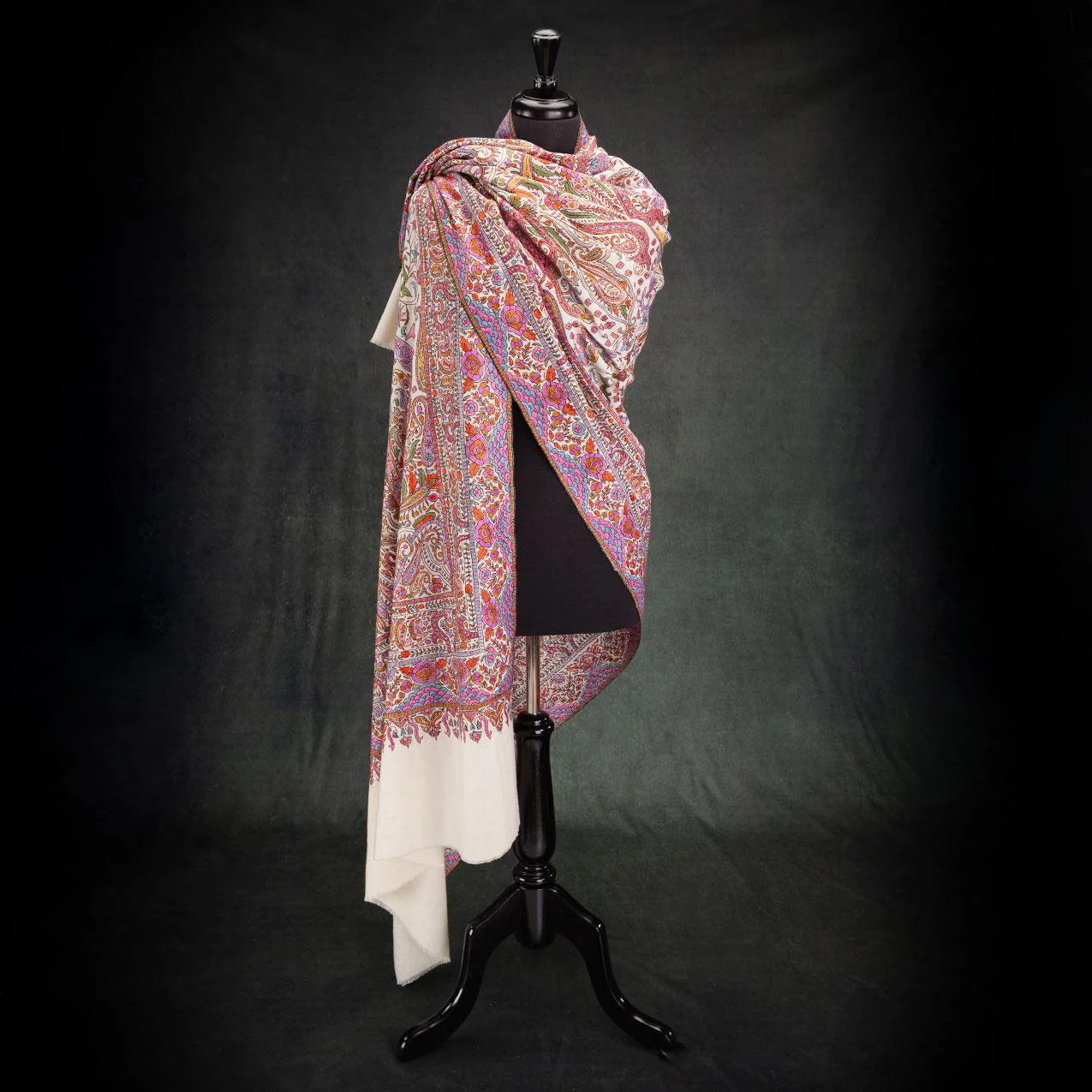
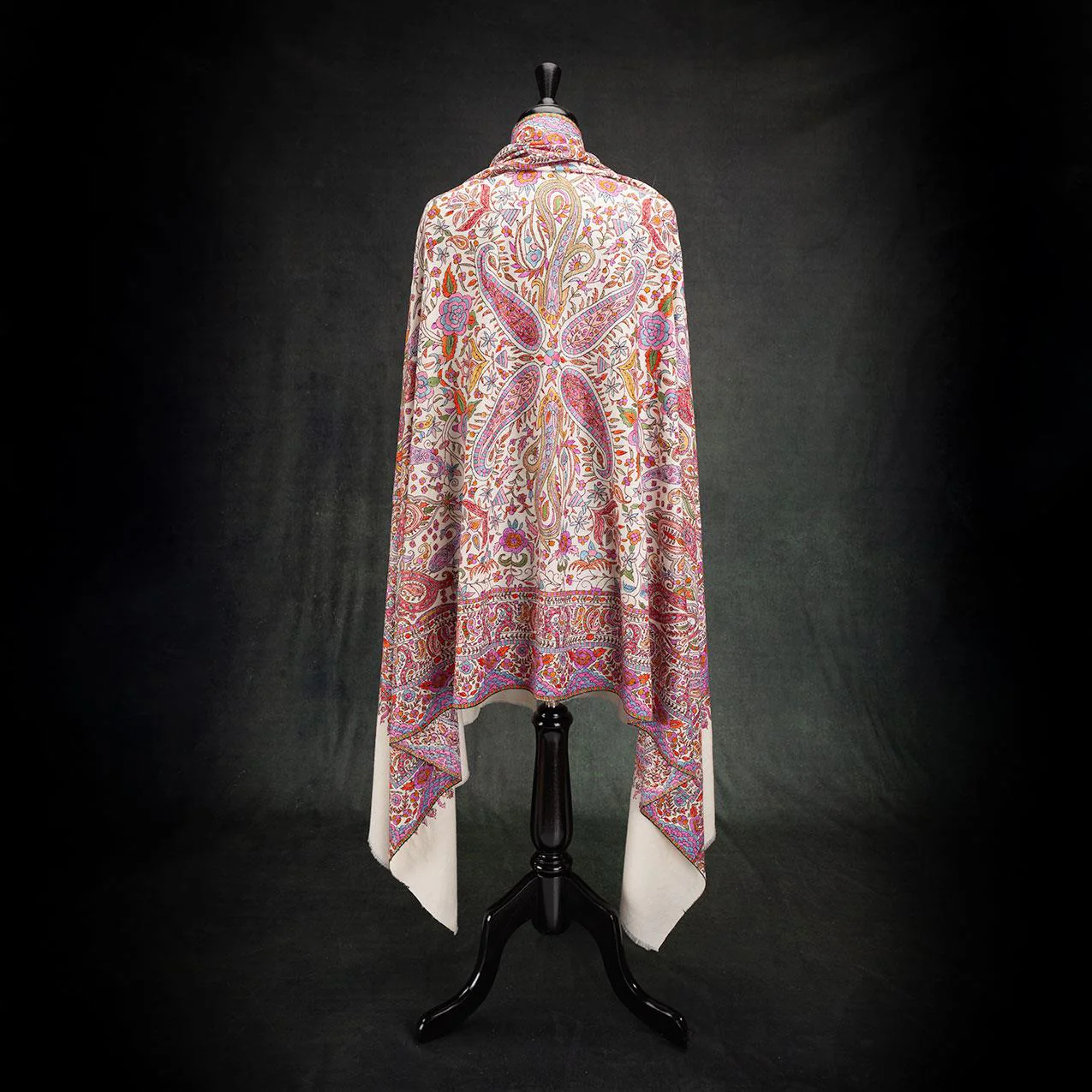
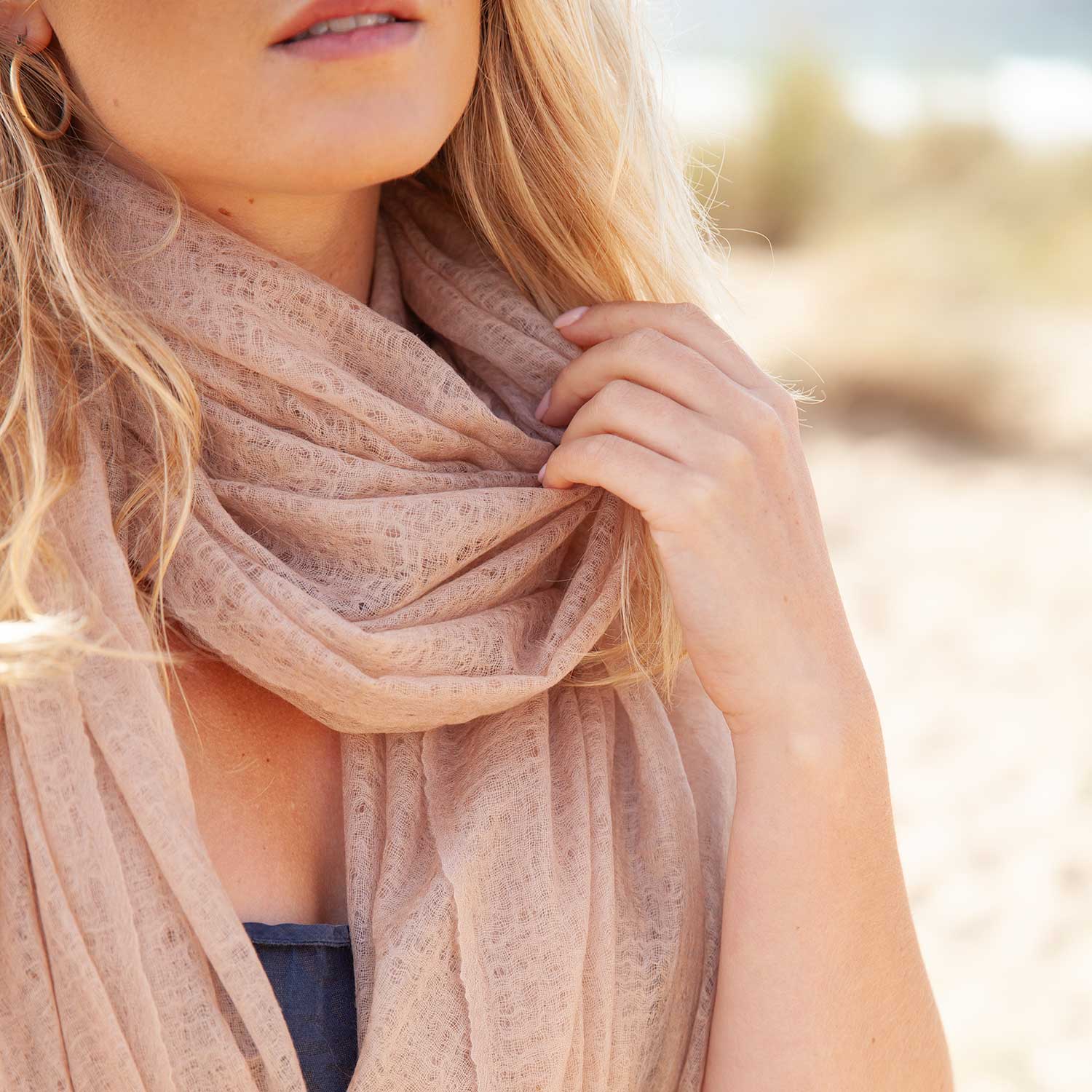
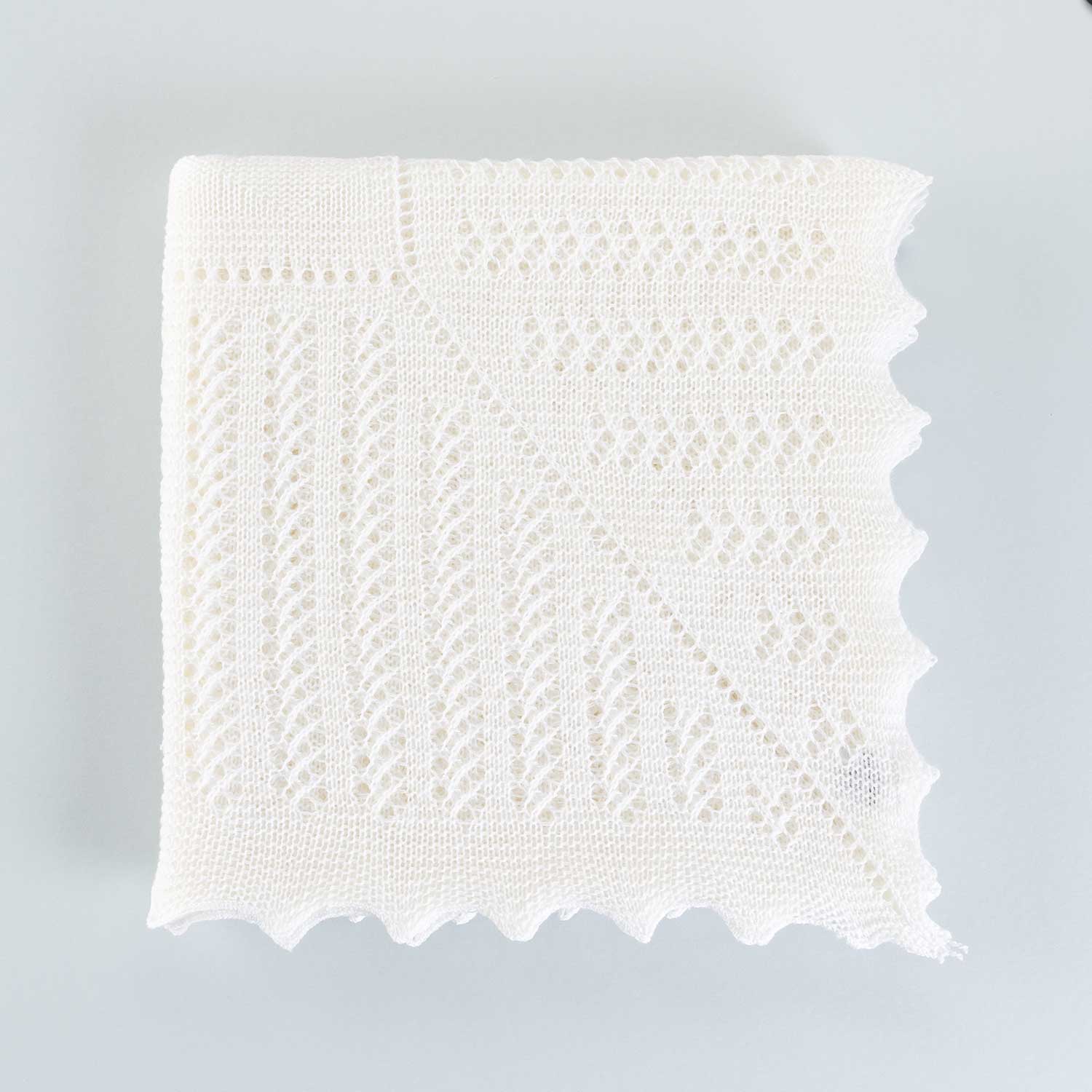
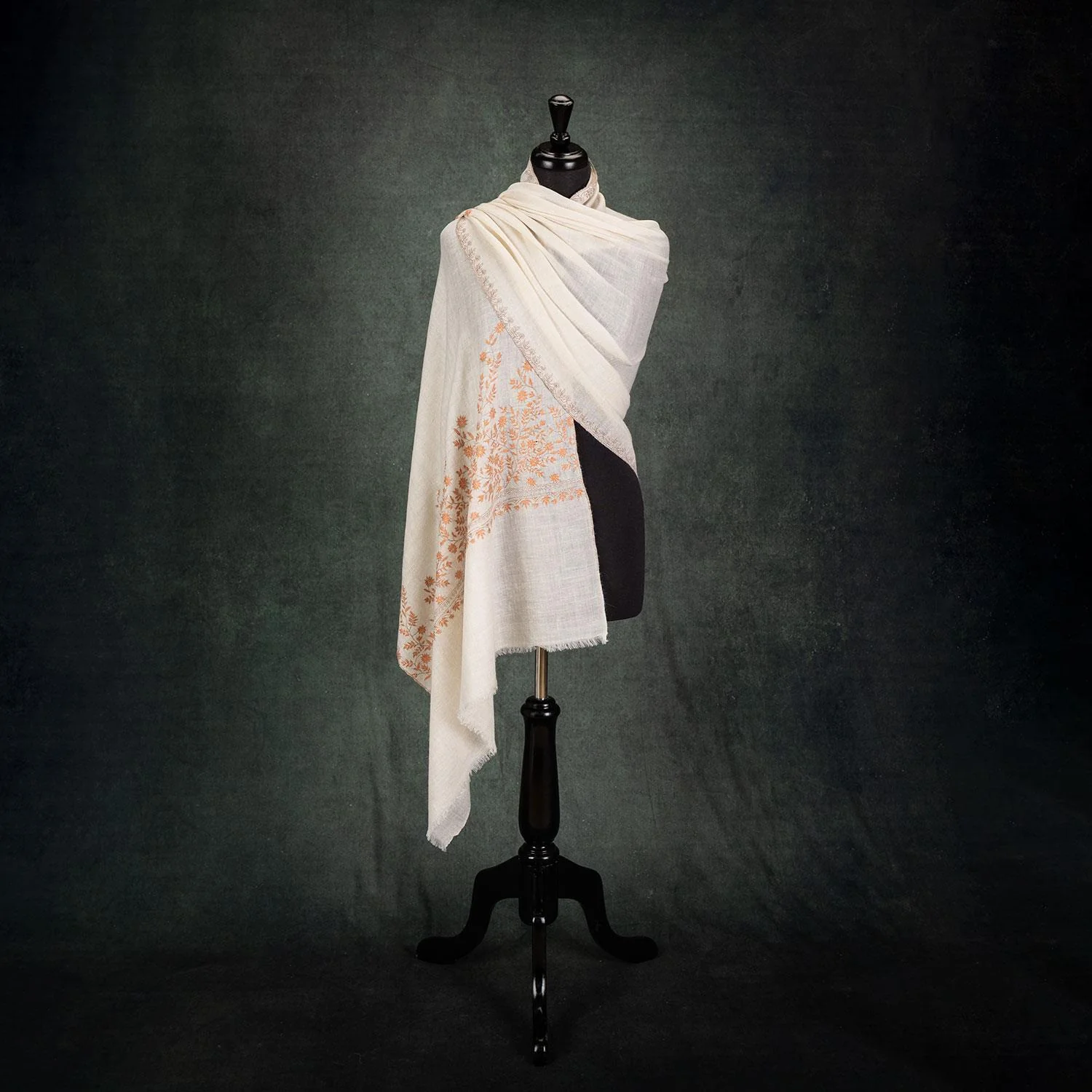
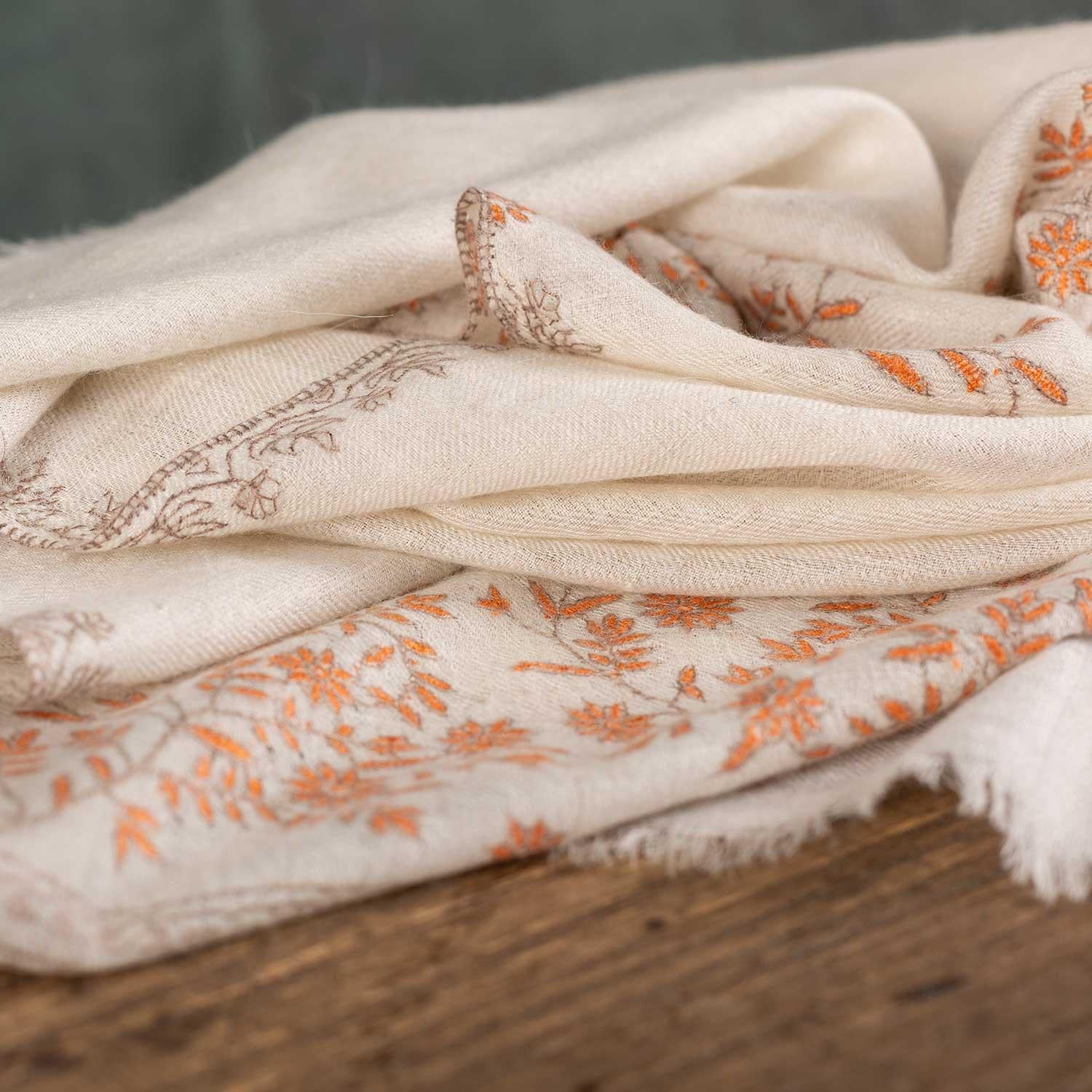
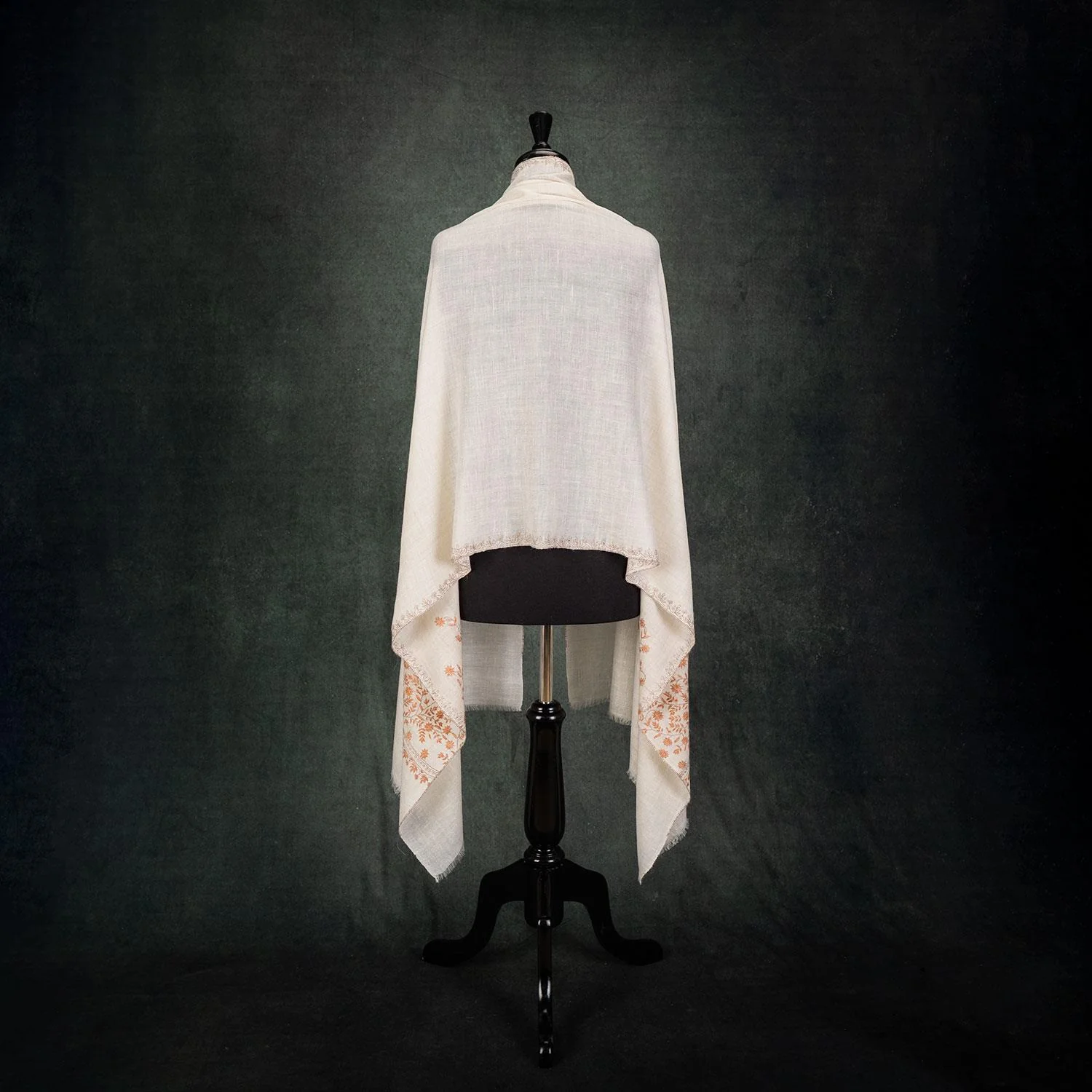
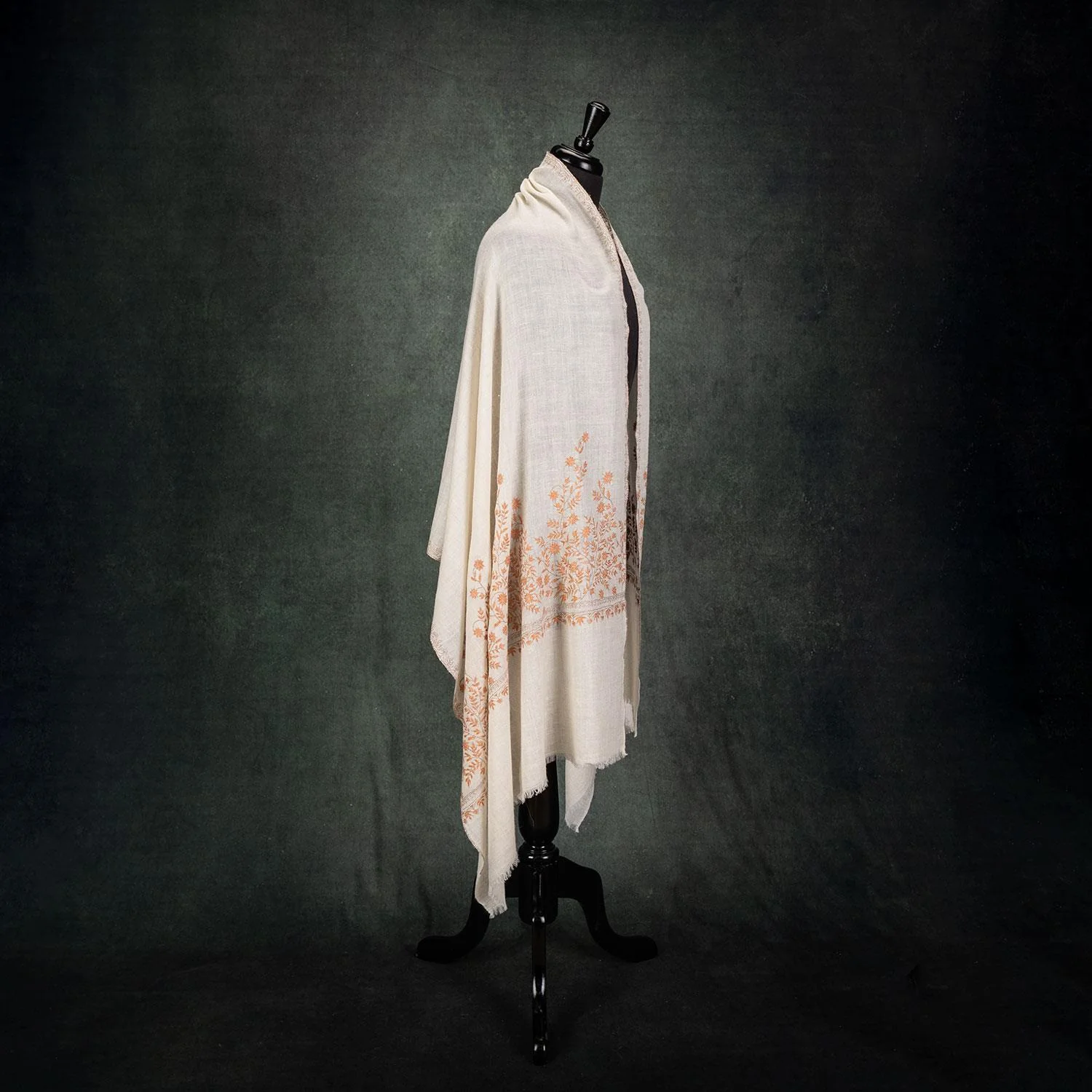
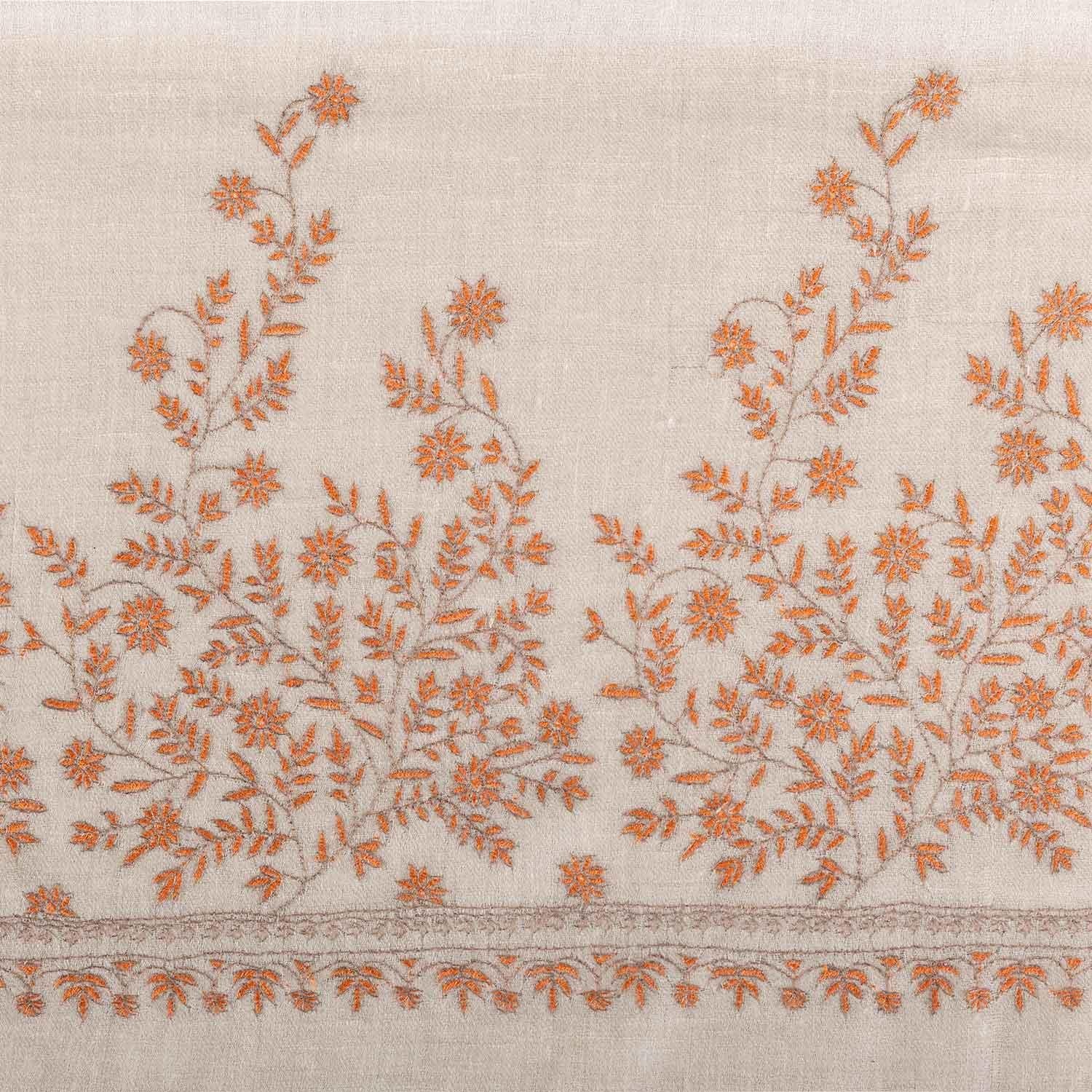
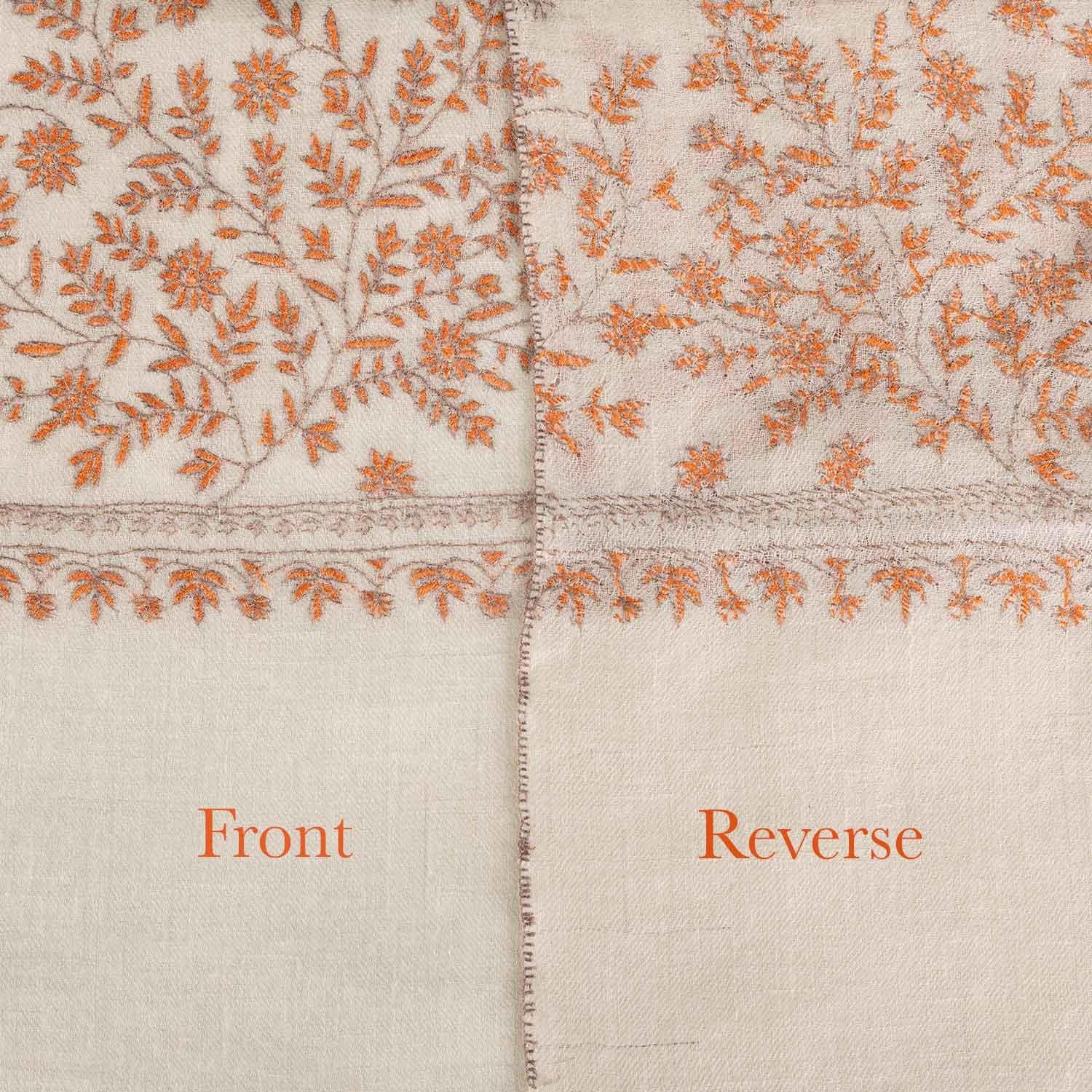
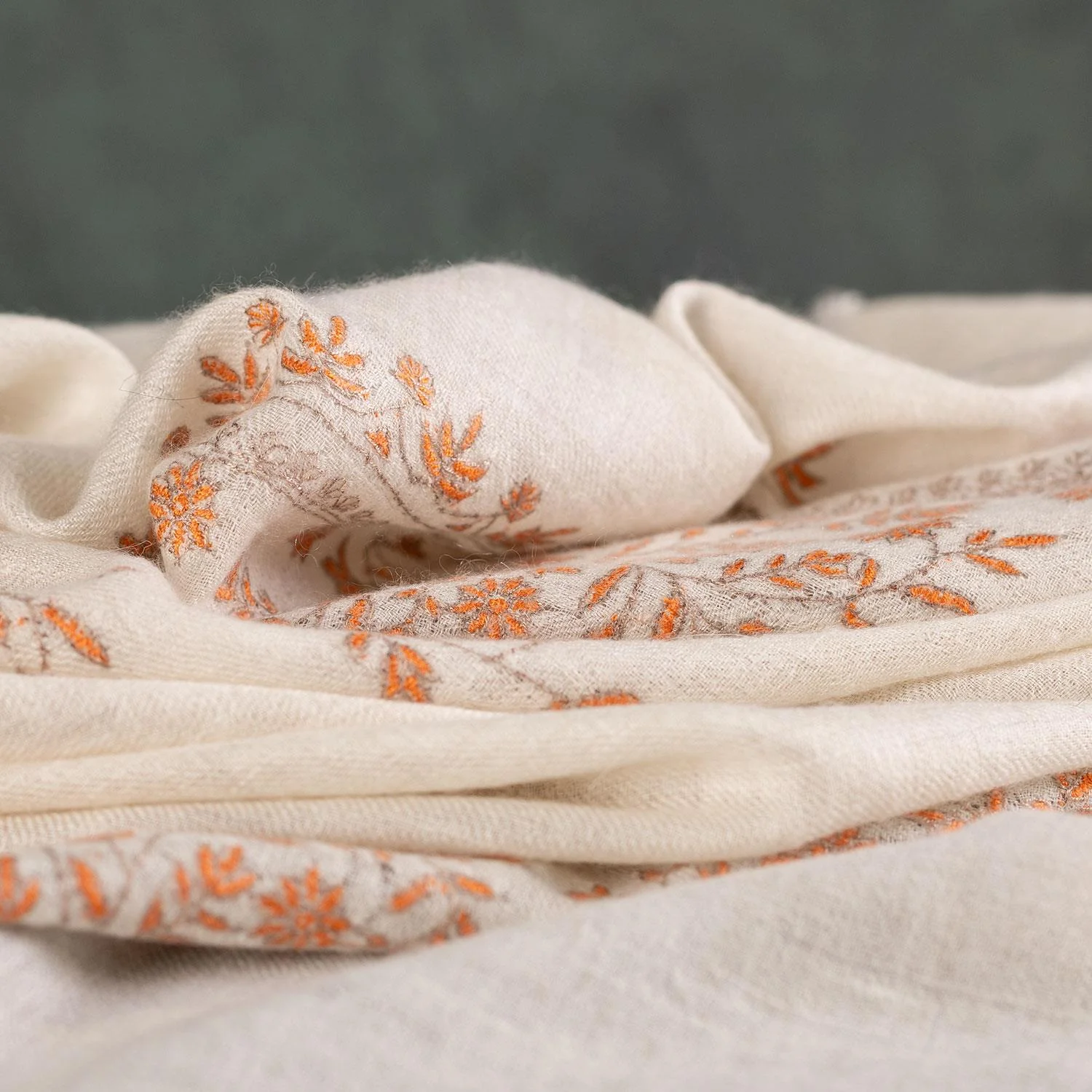
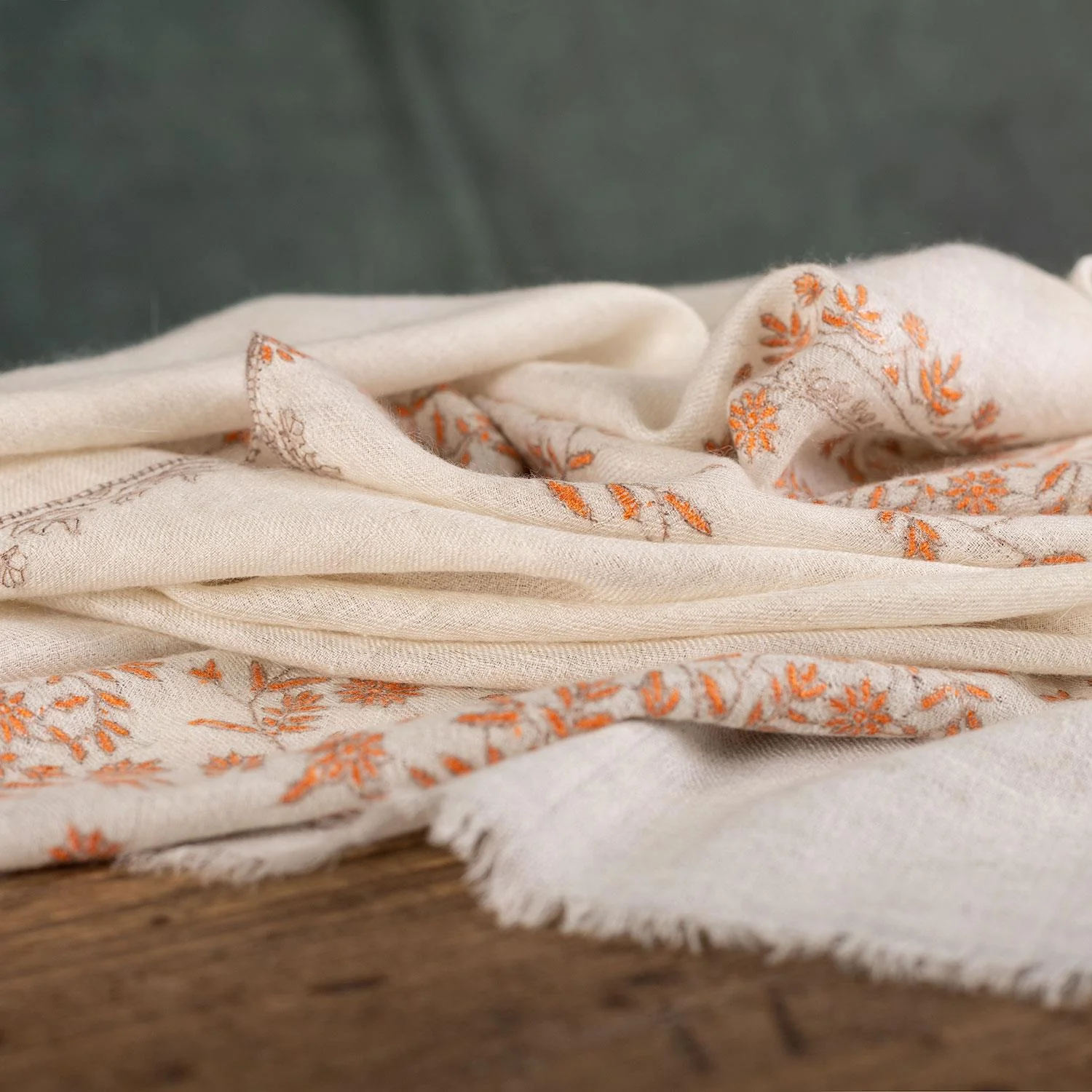
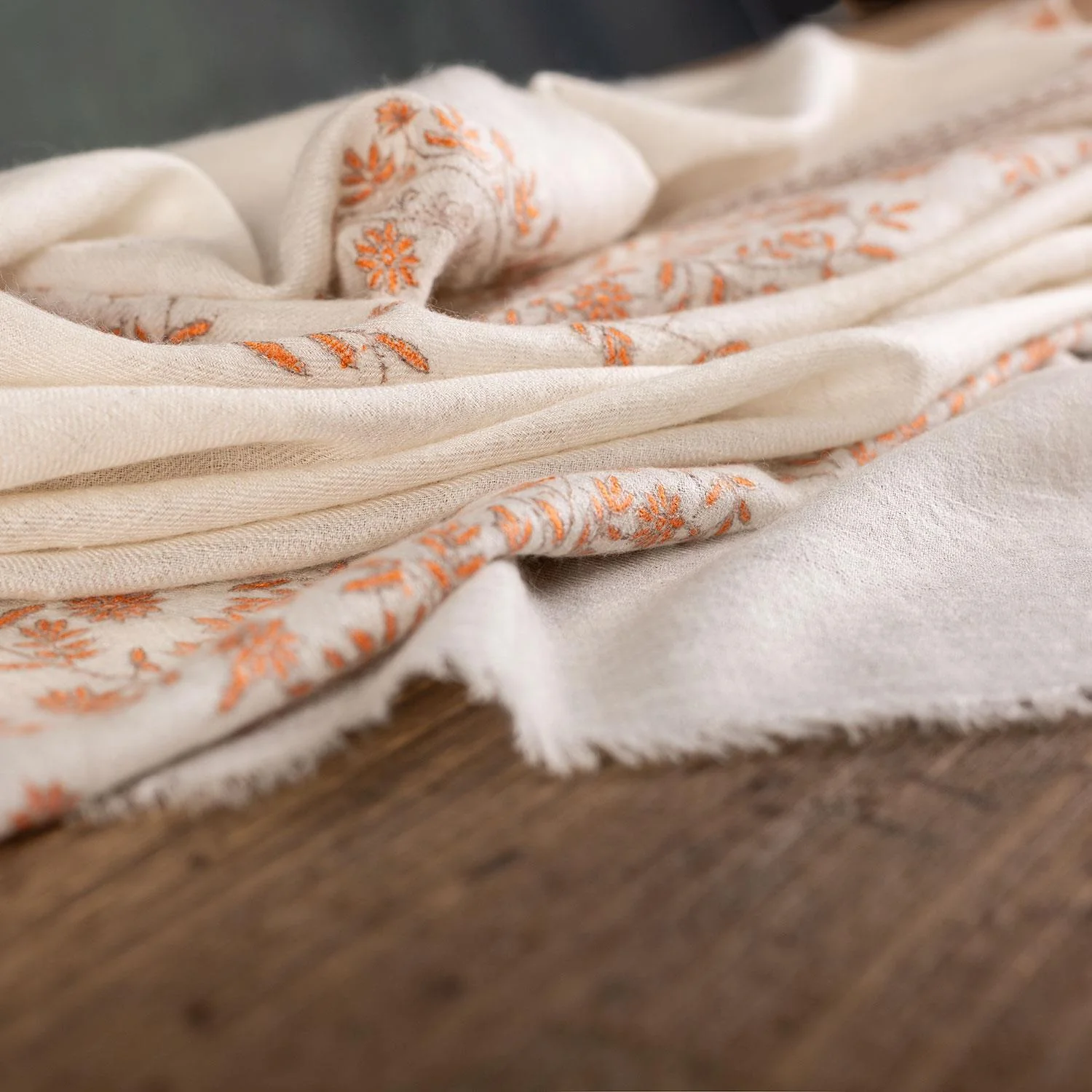
A handloomed, hand-embroidered shawl from the Spring of Kashmir series. Inspired by the wildflowers that bloom across Kashmir each spring, every shawl shares the same design, interpreted in different colourways. This example is woven in undyed cashmere and finished with embroidered orange flowers.
The cashmere for this series was sourced from goats belonging to Mr Tsering Angchuk in Tsokar Village, near the famous Tsokar Lake. Here, winter temperatures can drop to –35°C, and local goats develop an ultra-fine undercoat with extraordinary insulating properties. These ultra-fine fibres, measuring between 9–16 microns, are light, soft and naturally warm.
Dehairing, carding, and spinning were all carried out by hand by skilled craftspeople in Kashmir. Dehairing removes the coarse guard hairs, leaving only the softest pashmina fibres, which are then carefully carded and hand-spun. The resulting yarn ranges from 110–140 English count — a level of fineness that modern machinery cannot replicate without adding a synthetic carrier fibre. Mrs Nusrat Fatima, who has been hand spinning for the last 17 years, spun the yarn for the Spring of Kashmir series, and then handloomed by Mr Javed Ahmed Dar, who is a professional weaver and owns 4 Pit looms on which he creates the specialised fabrics necessary in his weaving house in Hawal Mohalla, Srinagar.
The embroidery for the series will have been predominantly carried out by trainees learning the art of hand embroidery in the Ganderbal district of Kashmir, and finished in Hawal, where Mr Zakir Wani carefully washes, presses, and prepares shawls for final dispatch.
Accompanying your shawl is 'The Kashmir Shawl', a book that beautifully illustrates the 'landscape and lives' that contribute to the creation of these shawls, enriching your appreciation for this artisanal work.
- Size: 70 x 200 cm (27.5" x 76.5")
- Composition: 100% Cashmere sourced in Ladakh
- Origin: Made in Kashmir
Product Care
Professional clean only.
Origin & Sustainability
This shawl embodies the principles of slow fashion — each stage, from sourcing to spinning, weaving and embroidery, is done by hand and can take months to complete. Every artisan involved brings years of skill, care and cultural heritage to the process.
Made from Grade A Ladakhi pashmina, this shawl uses one of the world’s finest natural fibres. Cashmere is not only supremely soft and warm, it is also renewable, biodegradable, and long-lasting — a conscious choice for those who value quality over quantity.
By supporting this craft, you help sustain traditional livelihoods and protect centuries-old skills and traditions. Read more on our Himalaya-based suppliers here.
Original: $596.46
-65%$596.46
$208.76More Images
Spring of Kashmir Stole Orange Hand Embroidery
A handloomed, hand-embroidered shawl from the Spring of Kashmir series. Inspired by the wildflowers that bloom across Kashmir each spring, every shawl shares the same design, interpreted in different colourways. This example is woven in undyed cashmere and finished with embroidered orange flowers.
The cashmere for this series was sourced from goats belonging to Mr Tsering Angchuk in Tsokar Village, near the famous Tsokar Lake. Here, winter temperatures can drop to –35°C, and local goats develop an ultra-fine undercoat with extraordinary insulating properties. These ultra-fine fibres, measuring between 9–16 microns, are light, soft and naturally warm.
Dehairing, carding, and spinning were all carried out by hand by skilled craftspeople in Kashmir. Dehairing removes the coarse guard hairs, leaving only the softest pashmina fibres, which are then carefully carded and hand-spun. The resulting yarn ranges from 110–140 English count — a level of fineness that modern machinery cannot replicate without adding a synthetic carrier fibre. Mrs Nusrat Fatima, who has been hand spinning for the last 17 years, spun the yarn for the Spring of Kashmir series, and then handloomed by Mr Javed Ahmed Dar, who is a professional weaver and owns 4 Pit looms on which he creates the specialised fabrics necessary in his weaving house in Hawal Mohalla, Srinagar.
The embroidery for the series will have been predominantly carried out by trainees learning the art of hand embroidery in the Ganderbal district of Kashmir, and finished in Hawal, where Mr Zakir Wani carefully washes, presses, and prepares shawls for final dispatch.
Accompanying your shawl is 'The Kashmir Shawl', a book that beautifully illustrates the 'landscape and lives' that contribute to the creation of these shawls, enriching your appreciation for this artisanal work.
- Size: 70 x 200 cm (27.5" x 76.5")
- Composition: 100% Cashmere sourced in Ladakh
- Origin: Made in Kashmir
Product Care
Professional clean only.
Origin & Sustainability
This shawl embodies the principles of slow fashion — each stage, from sourcing to spinning, weaving and embroidery, is done by hand and can take months to complete. Every artisan involved brings years of skill, care and cultural heritage to the process.
Made from Grade A Ladakhi pashmina, this shawl uses one of the world’s finest natural fibres. Cashmere is not only supremely soft and warm, it is also renewable, biodegradable, and long-lasting — a conscious choice for those who value quality over quantity.
By supporting this craft, you help sustain traditional livelihoods and protect centuries-old skills and traditions. Read more on our Himalaya-based suppliers here.
Product Information
Product Information
Shipping & Returns
Shipping & Returns
Description
A handloomed, hand-embroidered shawl from the Spring of Kashmir series. Inspired by the wildflowers that bloom across Kashmir each spring, every shawl shares the same design, interpreted in different colourways. This example is woven in undyed cashmere and finished with embroidered orange flowers.
The cashmere for this series was sourced from goats belonging to Mr Tsering Angchuk in Tsokar Village, near the famous Tsokar Lake. Here, winter temperatures can drop to –35°C, and local goats develop an ultra-fine undercoat with extraordinary insulating properties. These ultra-fine fibres, measuring between 9–16 microns, are light, soft and naturally warm.
Dehairing, carding, and spinning were all carried out by hand by skilled craftspeople in Kashmir. Dehairing removes the coarse guard hairs, leaving only the softest pashmina fibres, which are then carefully carded and hand-spun. The resulting yarn ranges from 110–140 English count — a level of fineness that modern machinery cannot replicate without adding a synthetic carrier fibre. Mrs Nusrat Fatima, who has been hand spinning for the last 17 years, spun the yarn for the Spring of Kashmir series, and then handloomed by Mr Javed Ahmed Dar, who is a professional weaver and owns 4 Pit looms on which he creates the specialised fabrics necessary in his weaving house in Hawal Mohalla, Srinagar.
The embroidery for the series will have been predominantly carried out by trainees learning the art of hand embroidery in the Ganderbal district of Kashmir, and finished in Hawal, where Mr Zakir Wani carefully washes, presses, and prepares shawls for final dispatch.
Accompanying your shawl is 'The Kashmir Shawl', a book that beautifully illustrates the 'landscape and lives' that contribute to the creation of these shawls, enriching your appreciation for this artisanal work.
- Size: 70 x 200 cm (27.5" x 76.5")
- Composition: 100% Cashmere sourced in Ladakh
- Origin: Made in Kashmir
Product Care
Professional clean only.
Origin & Sustainability
This shawl embodies the principles of slow fashion — each stage, from sourcing to spinning, weaving and embroidery, is done by hand and can take months to complete. Every artisan involved brings years of skill, care and cultural heritage to the process.
Made from Grade A Ladakhi pashmina, this shawl uses one of the world’s finest natural fibres. Cashmere is not only supremely soft and warm, it is also renewable, biodegradable, and long-lasting — a conscious choice for those who value quality over quantity.
By supporting this craft, you help sustain traditional livelihoods and protect centuries-old skills and traditions. Read more on our Himalaya-based suppliers here.