Sozni Embroidered Cashmere Pashmina Humayra
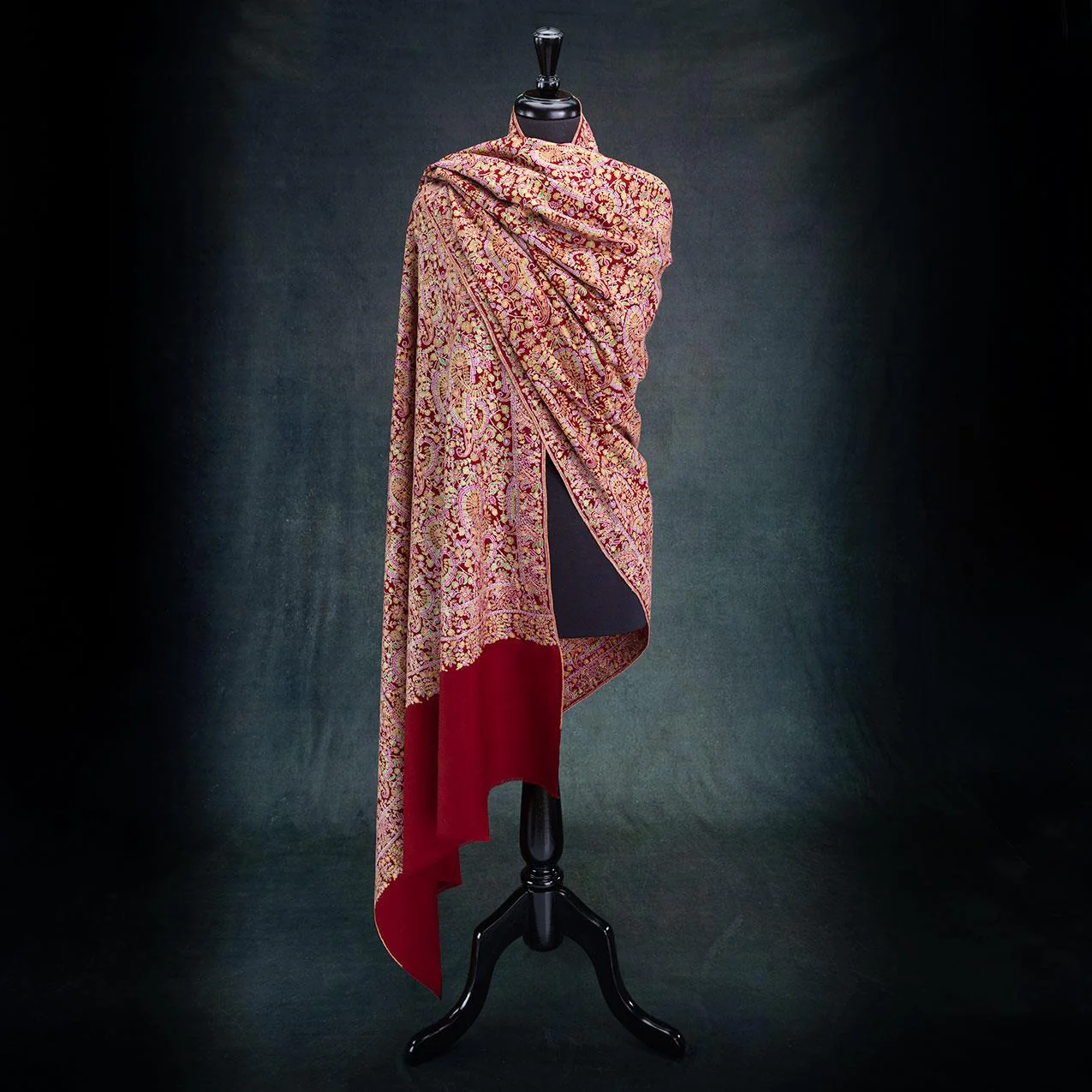
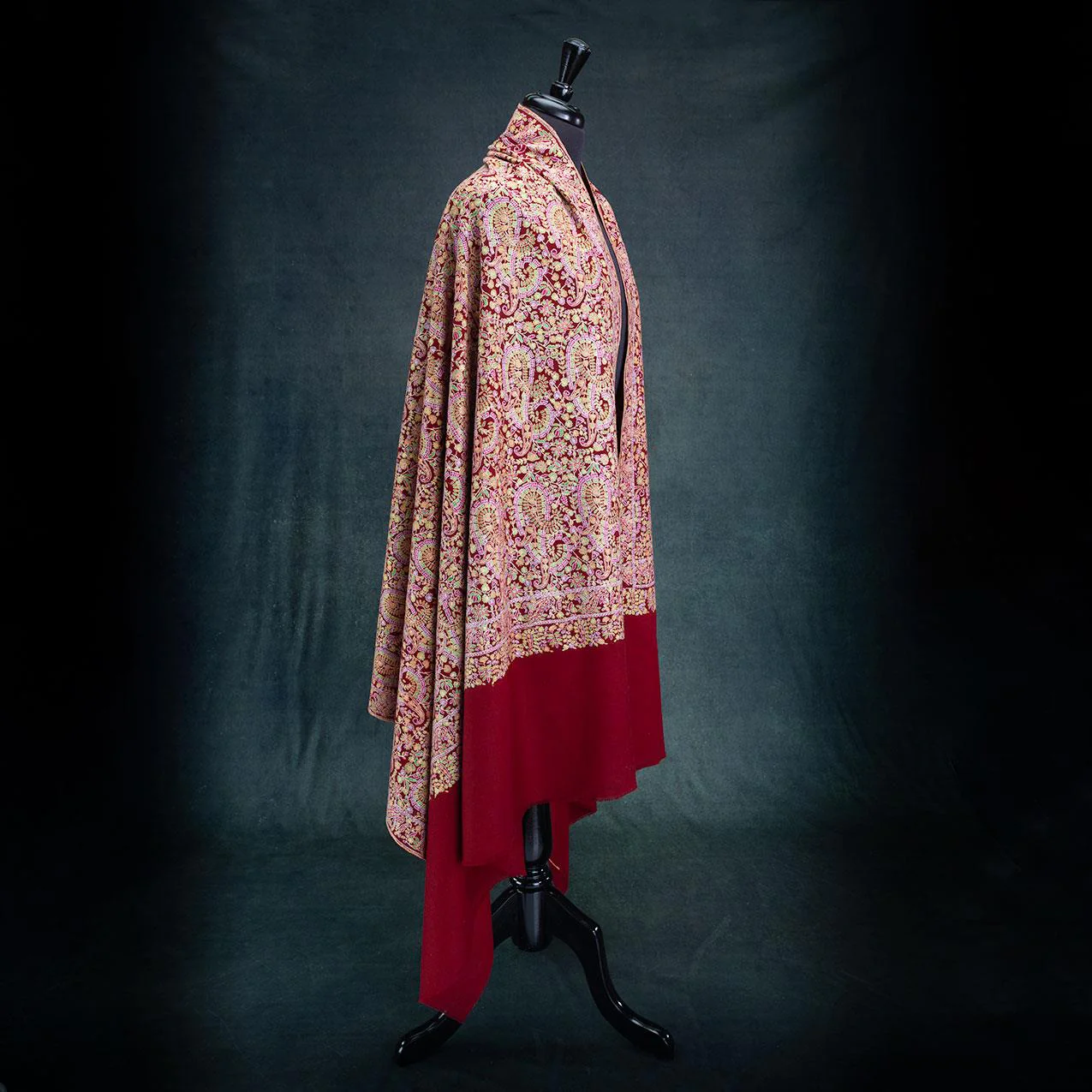
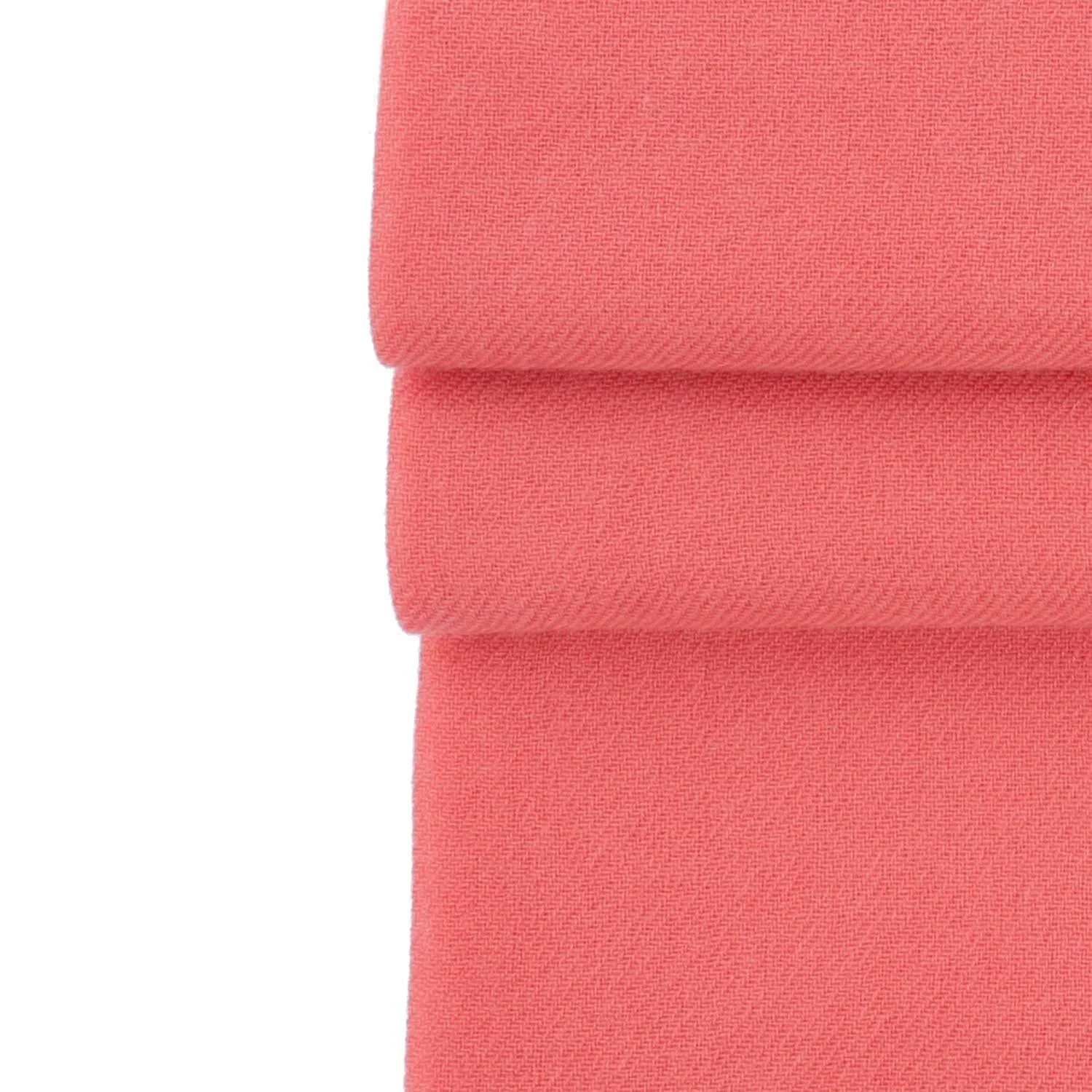
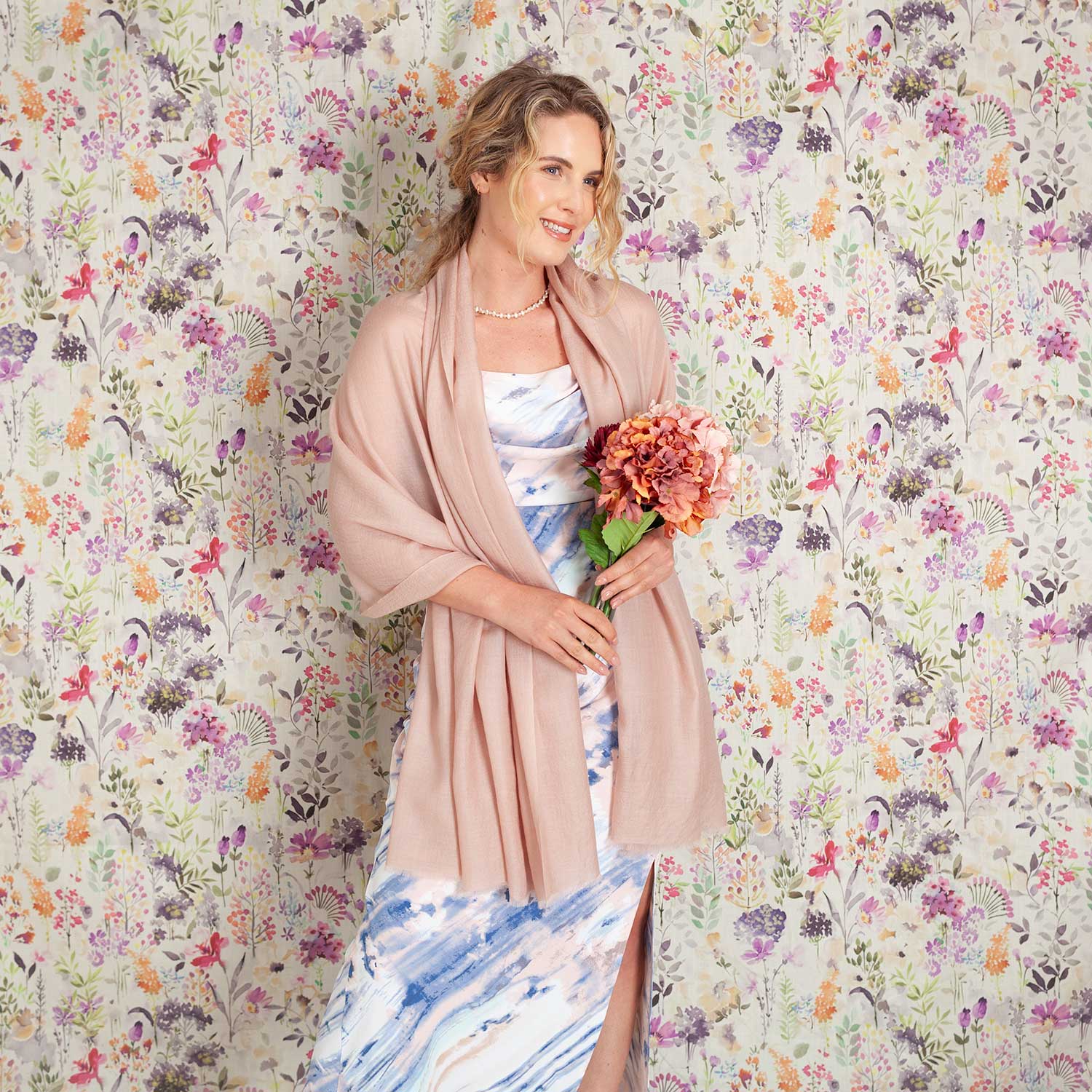
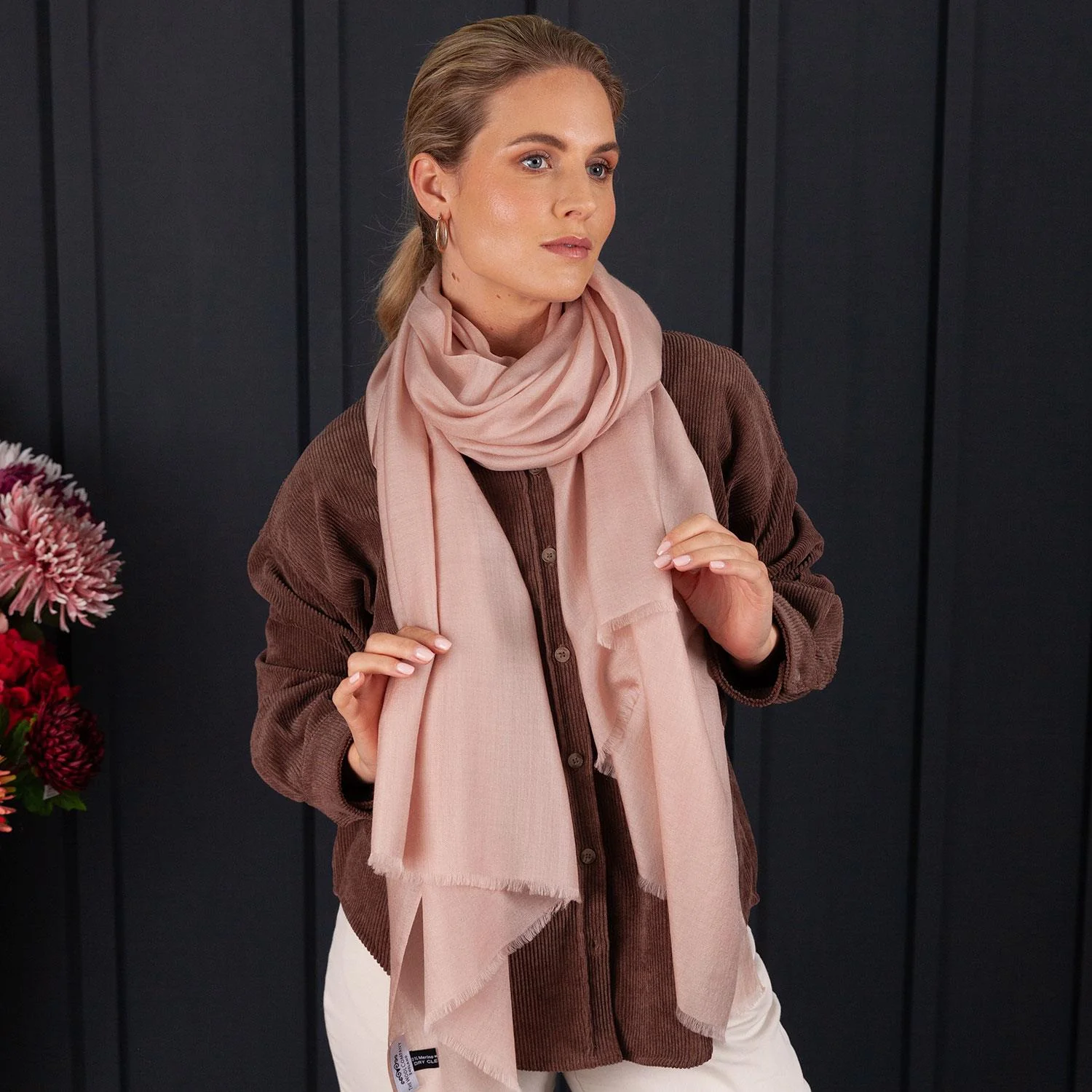
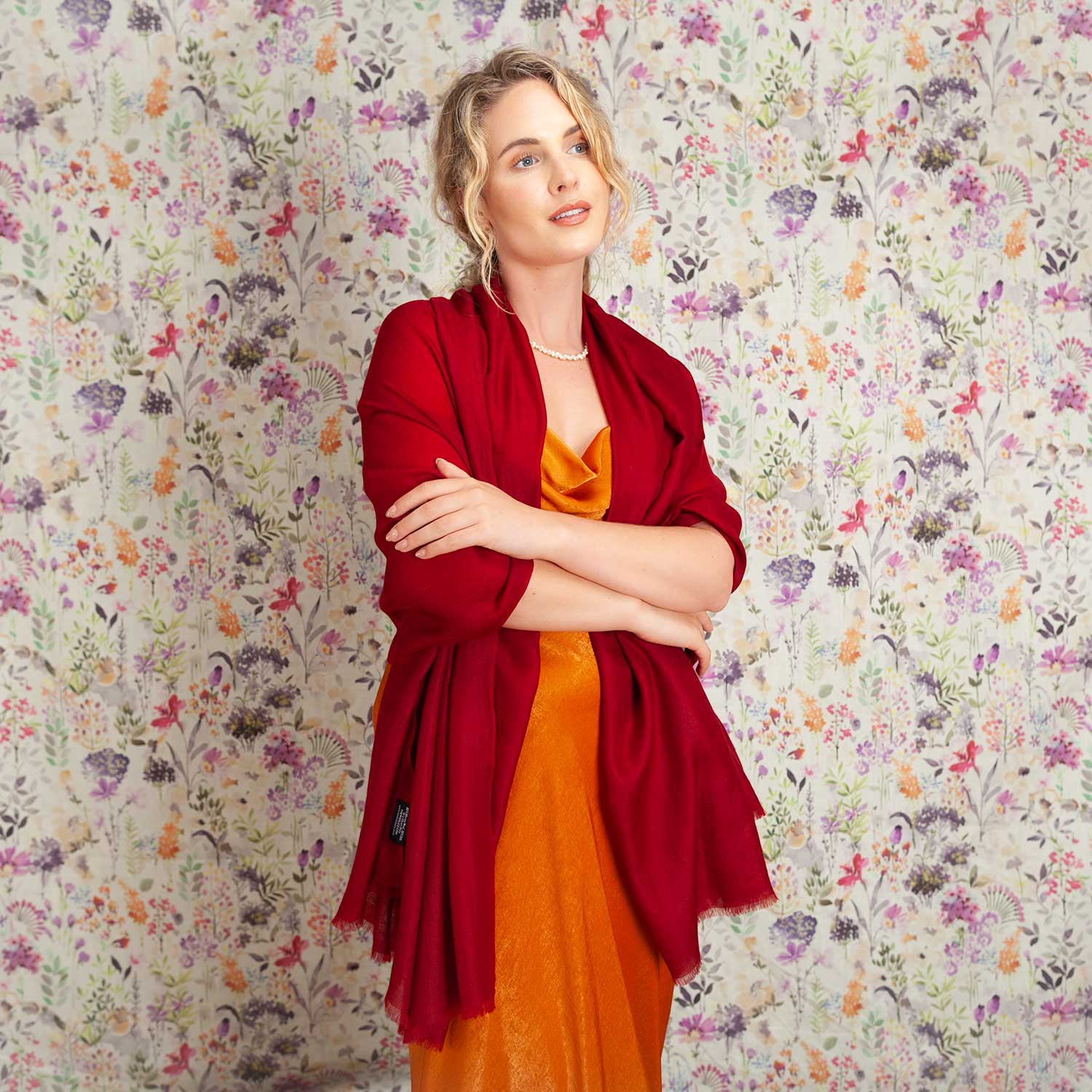
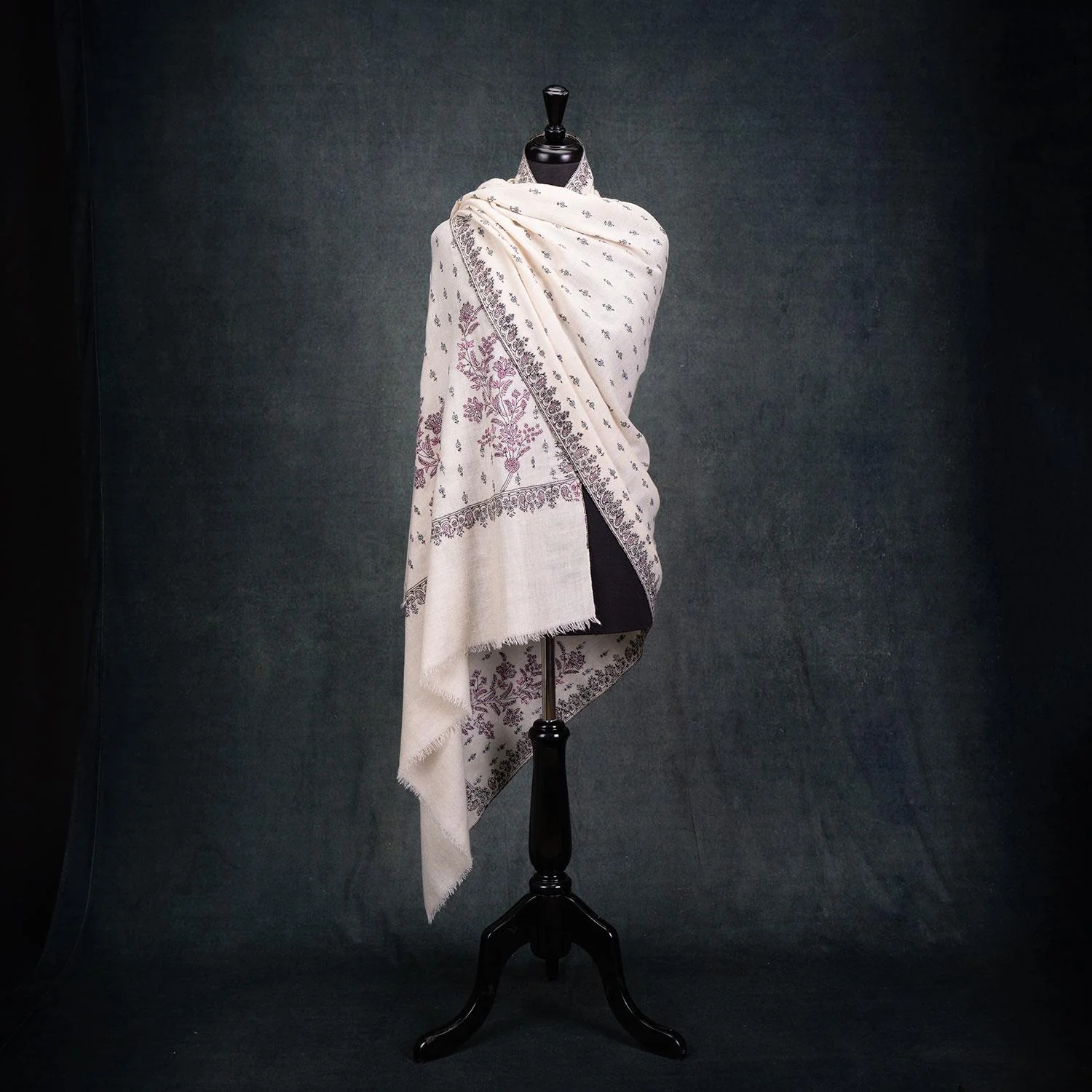
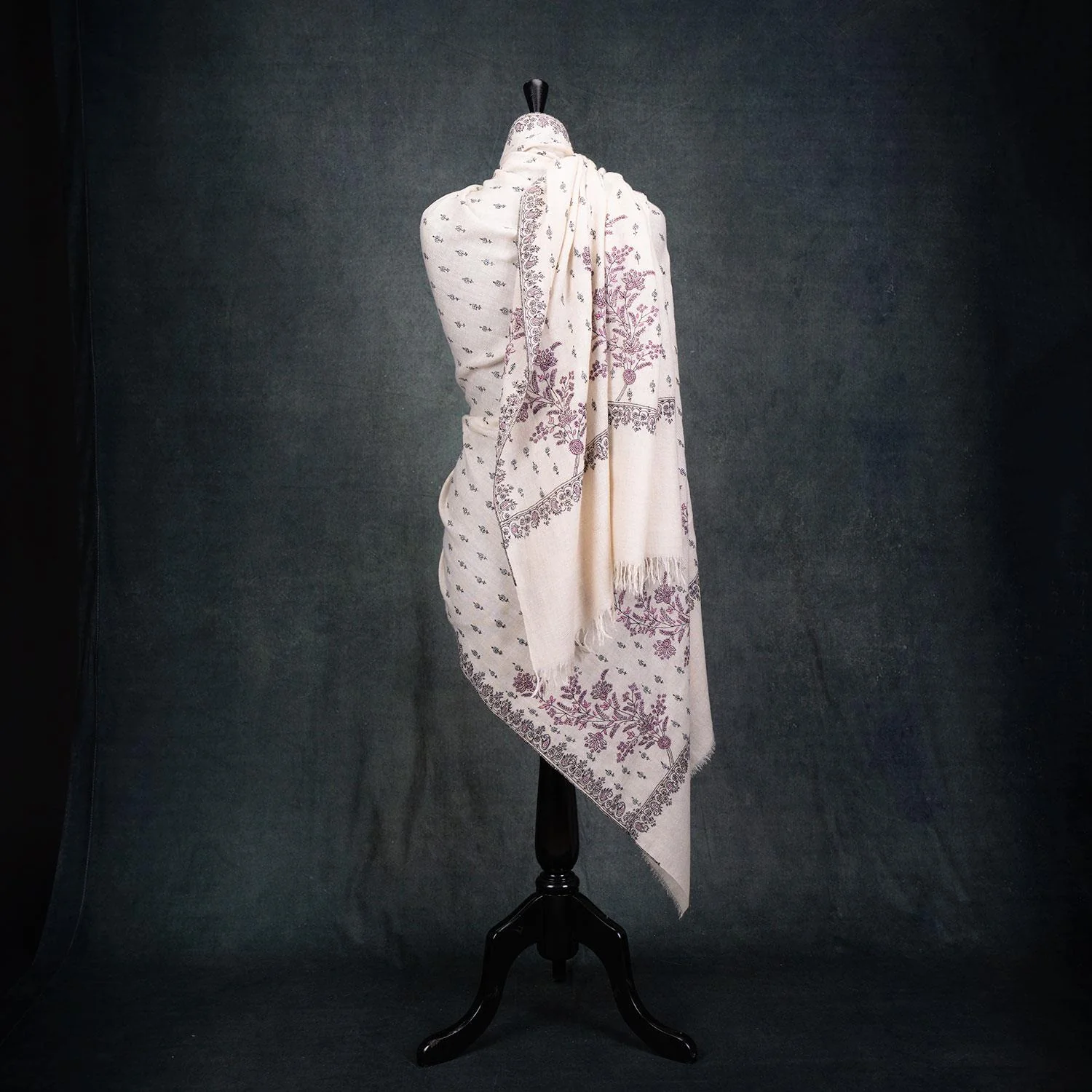
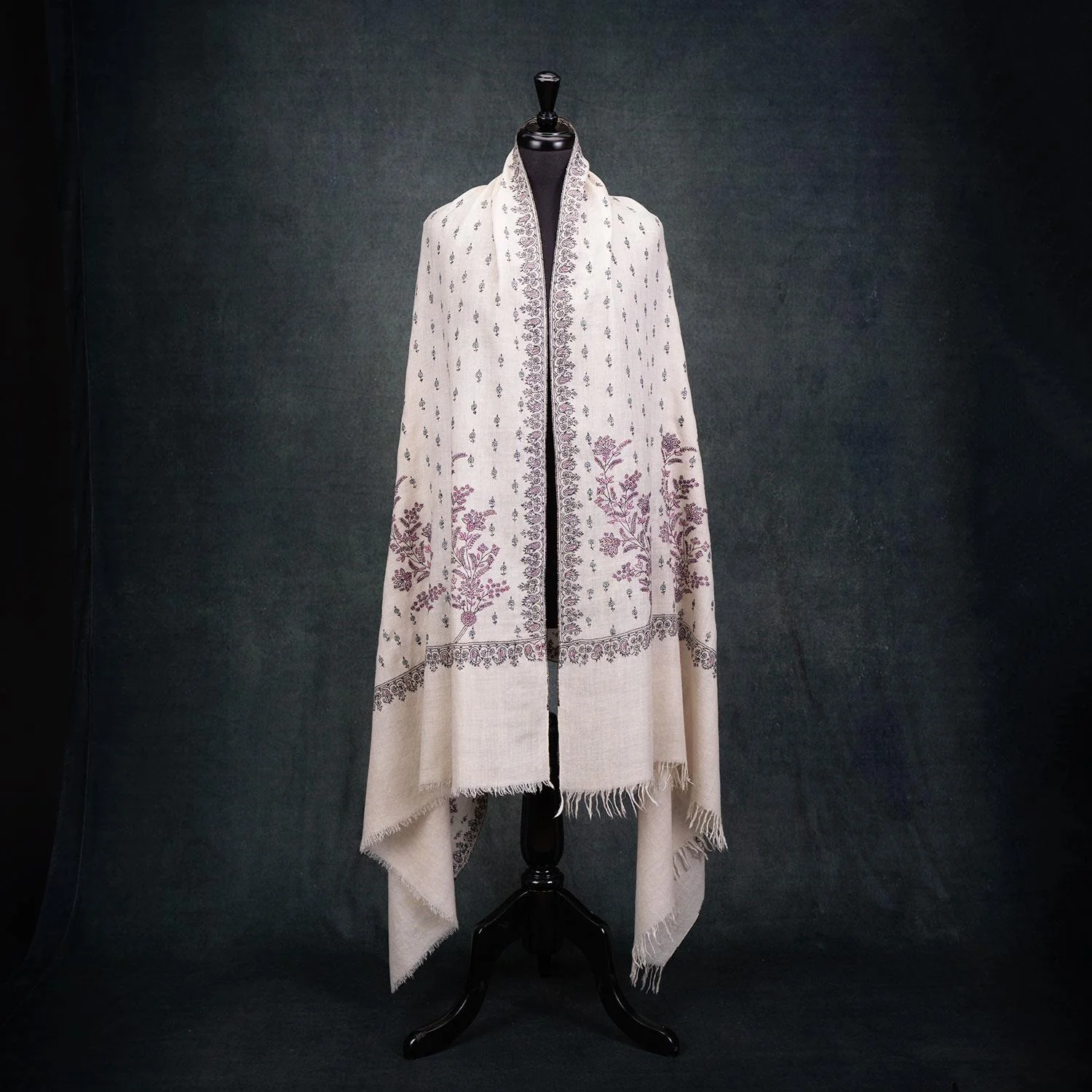
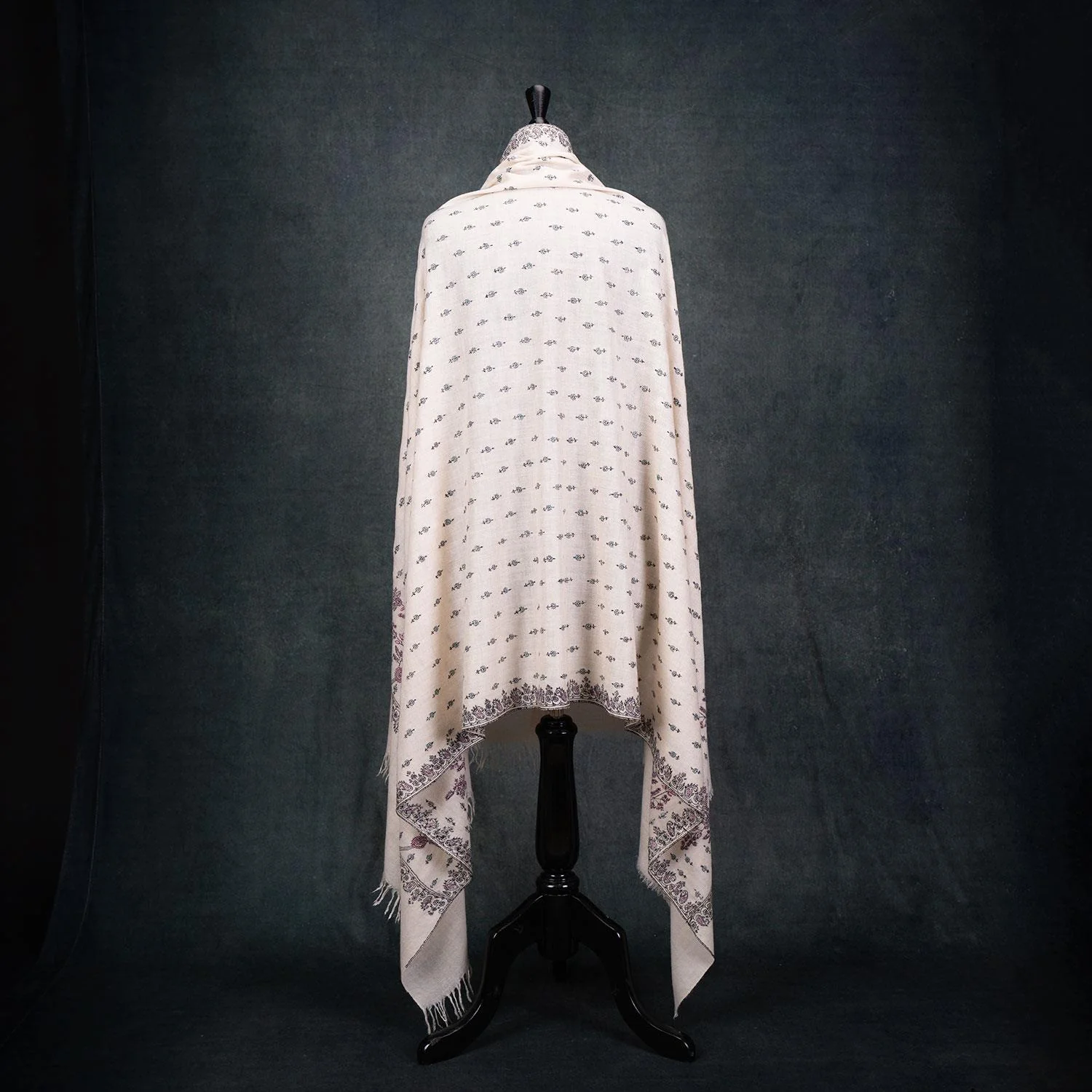
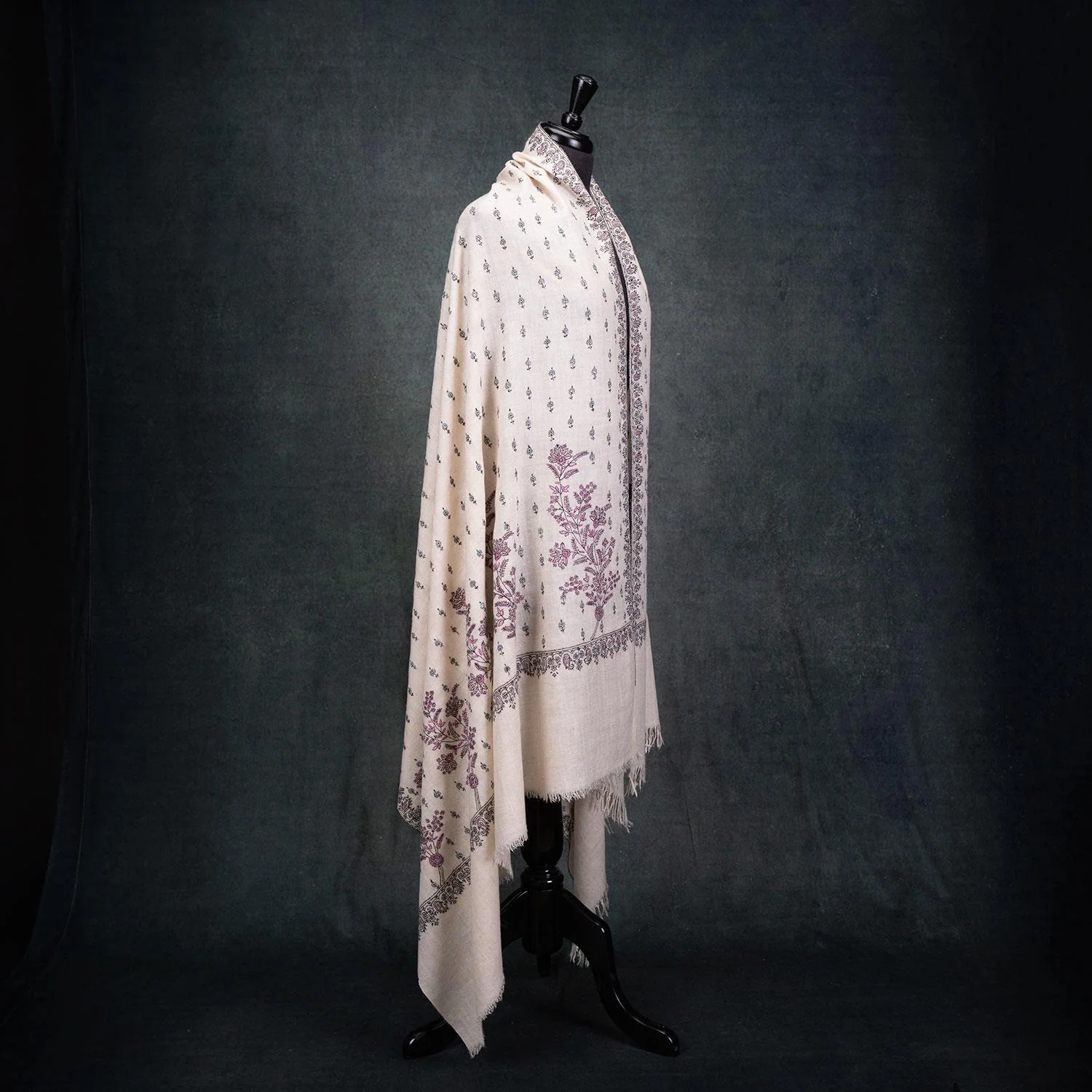
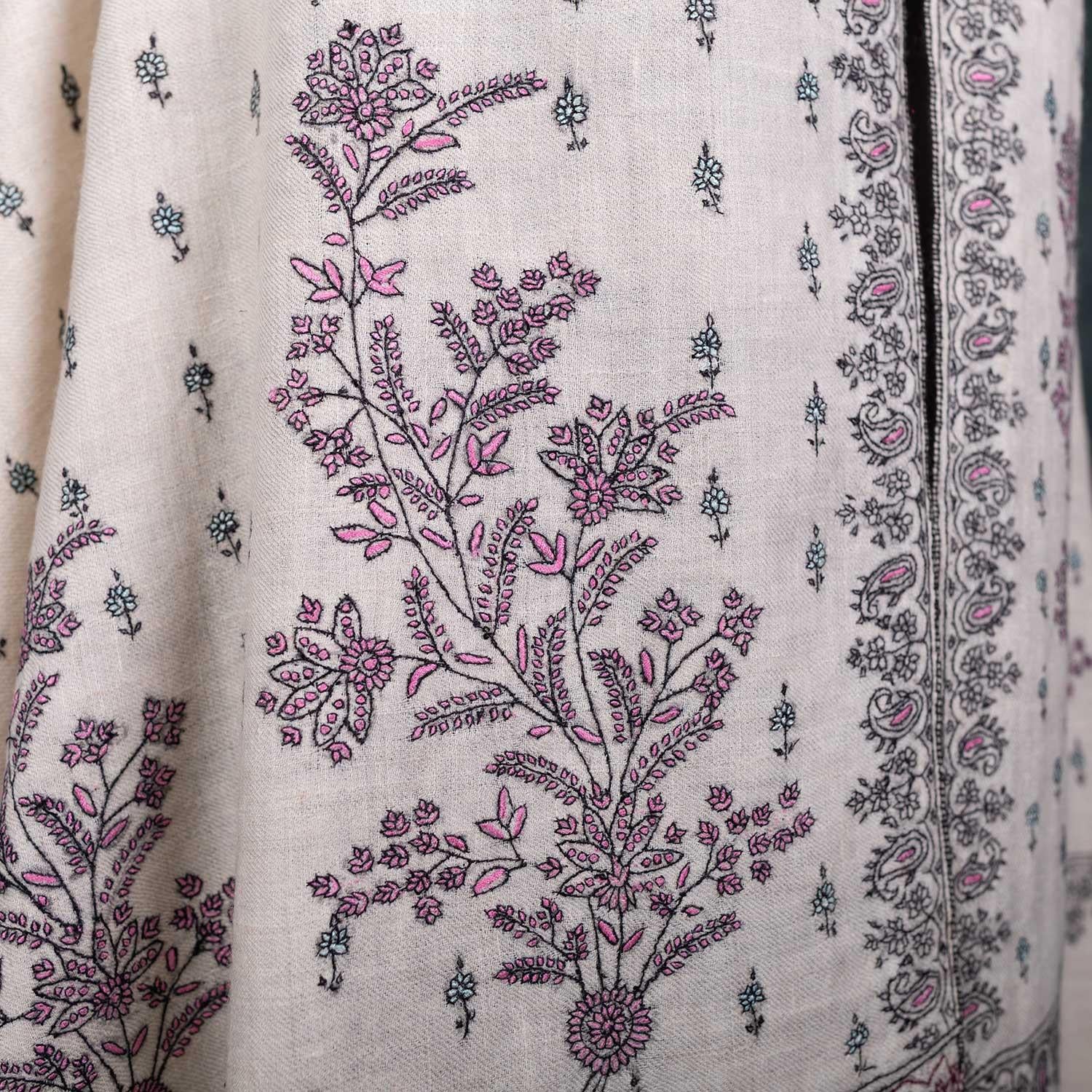
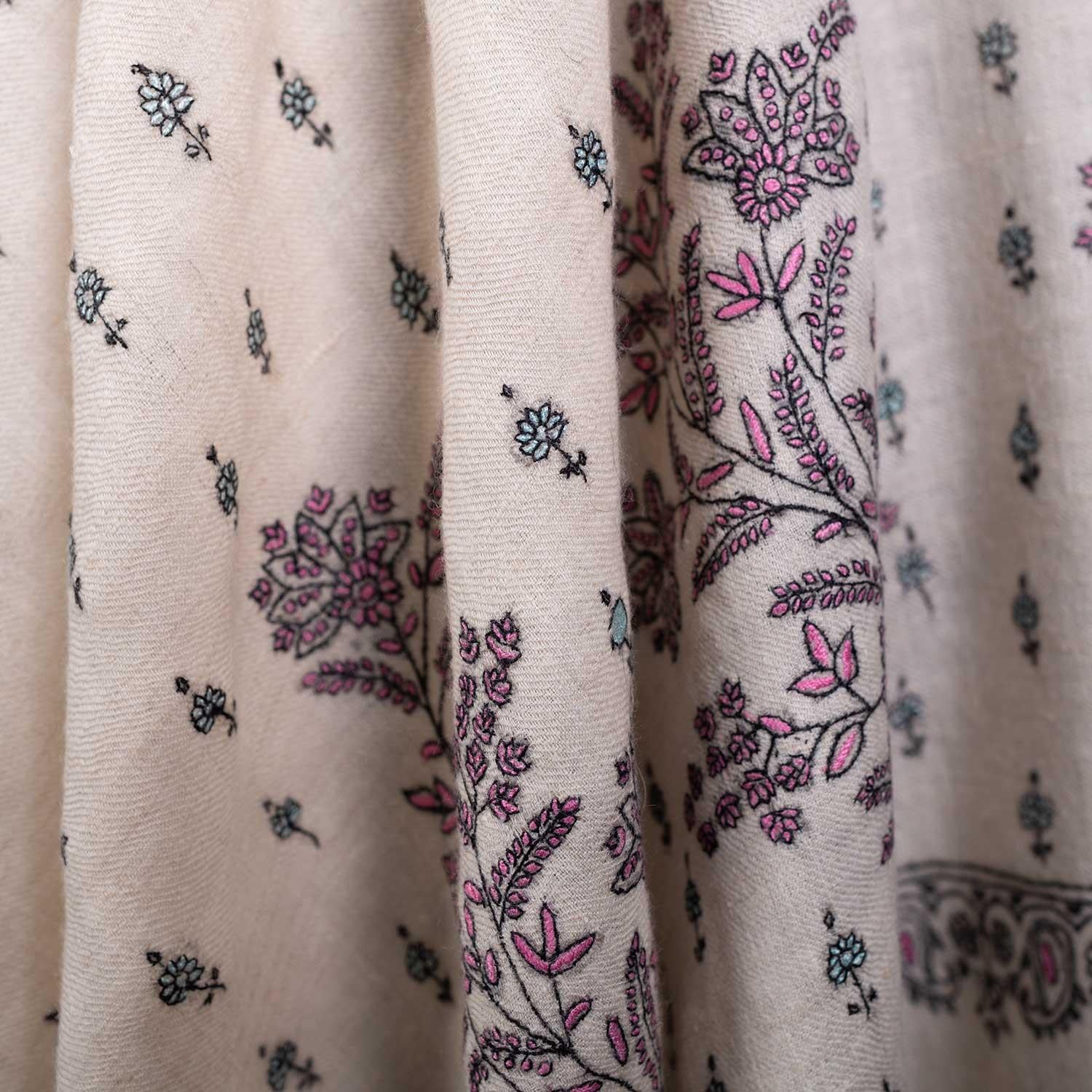
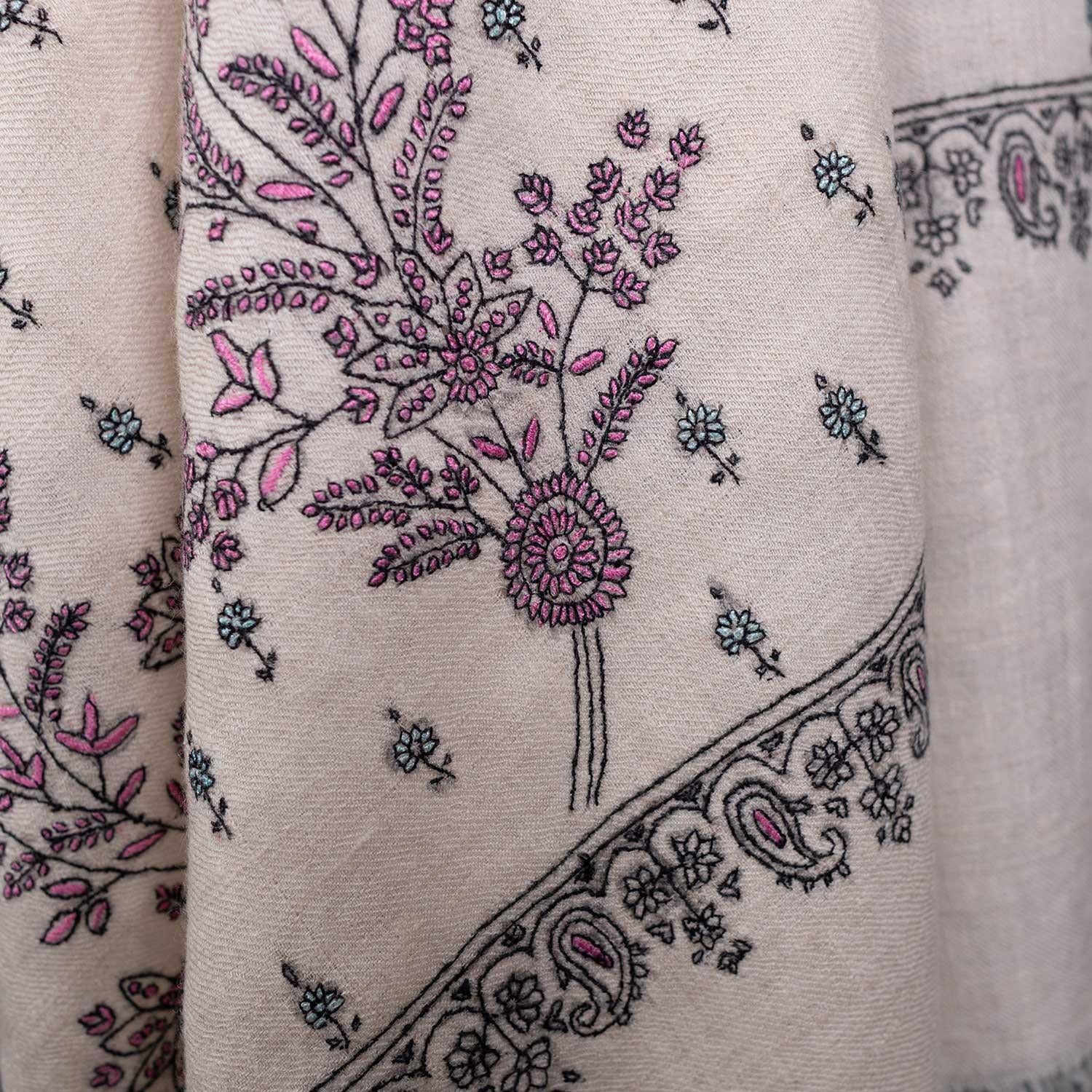
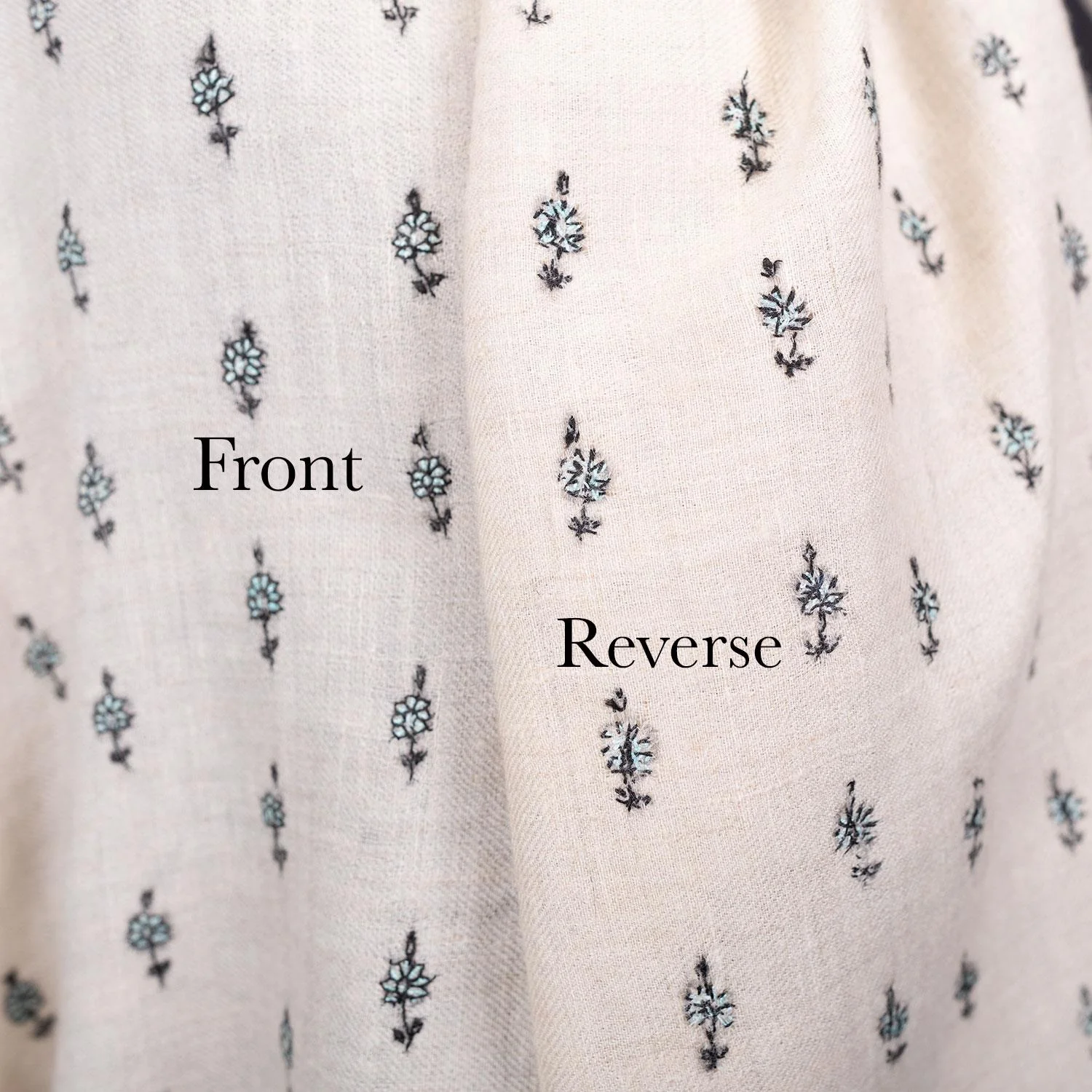
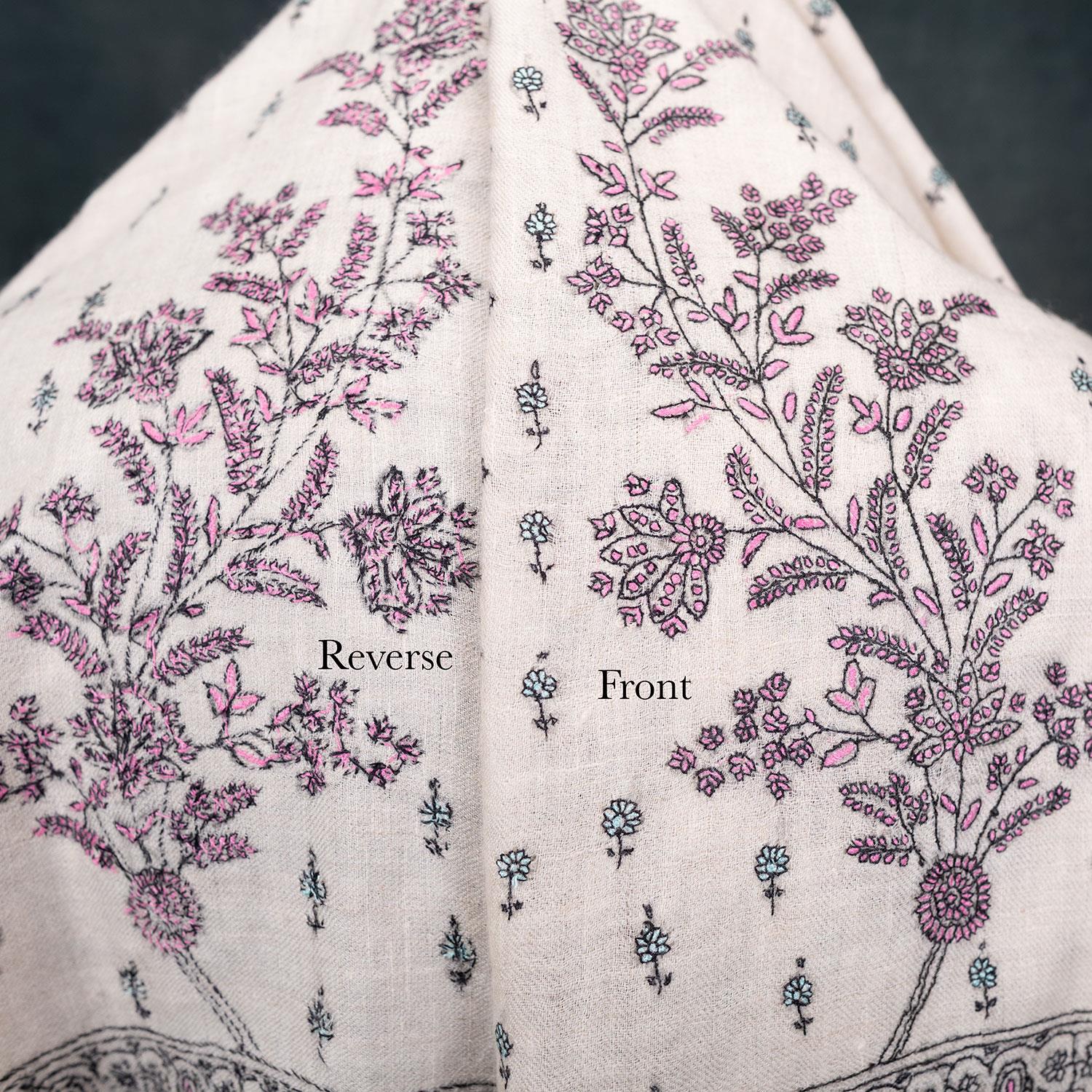
Beautifully detailed hand embroidery on undyed cashmere, woven in a traditional twill weave with a 4cm fringe. Generous size, with delicate floral designs worked into the soft cashmere in pink and pale aqua blue, contrasted with black outlines. From a classic Golden Era series creating new designs, with inspiration from authentic traditional everyday shawls, still found in the narrow lanes of Kashmir, using the same handcrafted arts as used 200 years ago.
The cashmere for this shawl was sourced in Tsokar Village, Changthang, which is situated near to the famous Tsokar Lake.
Winter temperatures can fall below –15°C. In this harsh climate, the goats grow an exceptionally fine undercoat that naturally insulates against the cold. These fibres, selected from the softest Grade A batches, are known for their lightness, warmth and incredible softness.
Traditionally, the coarse guard hairs were removed by hand through the process of carding. Today, a cooperative supported by the Indian government now uses a six-stage carding machine to protect and modernise Ladakhi pashmina production in a state-of-the-art plant. The raw clean fibres were then spun on a handloom by Mrs Nusrat Fatima, who has been hand spinning for 17 years. Spinning is a traditional culture in Kashmir, the soft fibre is converted into yarn with a thickness ranging from 110-140 English count. Modern machinery would not be able to achieve this fine count without a carrier fibre to stop the cashmere fibres from breaking. It takes approximately one month to handspin 100 gms of pashmina yarn.
Woven in Hawal Mohalla, Srinagar by Mr Javed Ahmed Dar, who has four Pit Looms. Mr Dhar is a professional weaver who received a National Award for his weaving in 2017. The thread was also dyed in Hawal, while the embroidery was undertaken by a craftsman in the Ghanderbal district of Kashmir, where hand embroidery is a traditional craft. Mr Rafiq has worked with hand embroidery for 30 years, a piece of this quality would usually take approximately 3 - 4 months.
The finishing and quality check is done by Mr Zakir Wani at the antique finishing plant in Hawal, Srinagar. Tis shawl was finished in January 2023, and took more than three years along its journey from start to finish.
Each shawl is supplied with a copy of The Kashmir Shawl, a book that beautifully illustrates the landscape and lives that contribute to the creation of these amazing shawls, enriching your experience of this artisanal work.
- Size: approx. 100 × 208 cm, plus 4cm fringe, (39.5 × 82")
- Composition: 100% Cashmere, sourced in Ladakh from Grade A fibres
- Origin: Made in India
Product Care
Professional clean only.
Origin & Sustainability
This shawl embodies the principles of slow fashion — each stage, from sourcing to spinning, weaving and embroidery, is done by hand and can take months to complete. Every artisan involved brings years of skill, care and cultural heritage to the process.
Made from Grade A Ladakhi pashmina, this shawl uses one of the world’s finest natural fibres. Cashmere is not only supremely soft and warm, it is also renewable, biodegradable, and long-lasting — a conscious choice for those who value quality over quantity.
By supporting this craft, you help sustain traditional livelihoods and protect centuries-old skills and traditions. Read more on our Himalaya-based suppliers here.
Original: $1,337.97
-65%$1,337.97
$468.29More Images
Sozni Embroidered Cashmere Pashmina Humayra
Beautifully detailed hand embroidery on undyed cashmere, woven in a traditional twill weave with a 4cm fringe. Generous size, with delicate floral designs worked into the soft cashmere in pink and pale aqua blue, contrasted with black outlines. From a classic Golden Era series creating new designs, with inspiration from authentic traditional everyday shawls, still found in the narrow lanes of Kashmir, using the same handcrafted arts as used 200 years ago.
The cashmere for this shawl was sourced in Tsokar Village, Changthang, which is situated near to the famous Tsokar Lake.
Winter temperatures can fall below –15°C. In this harsh climate, the goats grow an exceptionally fine undercoat that naturally insulates against the cold. These fibres, selected from the softest Grade A batches, are known for their lightness, warmth and incredible softness.
Traditionally, the coarse guard hairs were removed by hand through the process of carding. Today, a cooperative supported by the Indian government now uses a six-stage carding machine to protect and modernise Ladakhi pashmina production in a state-of-the-art plant. The raw clean fibres were then spun on a handloom by Mrs Nusrat Fatima, who has been hand spinning for 17 years. Spinning is a traditional culture in Kashmir, the soft fibre is converted into yarn with a thickness ranging from 110-140 English count. Modern machinery would not be able to achieve this fine count without a carrier fibre to stop the cashmere fibres from breaking. It takes approximately one month to handspin 100 gms of pashmina yarn.
Woven in Hawal Mohalla, Srinagar by Mr Javed Ahmed Dar, who has four Pit Looms. Mr Dhar is a professional weaver who received a National Award for his weaving in 2017. The thread was also dyed in Hawal, while the embroidery was undertaken by a craftsman in the Ghanderbal district of Kashmir, where hand embroidery is a traditional craft. Mr Rafiq has worked with hand embroidery for 30 years, a piece of this quality would usually take approximately 3 - 4 months.
The finishing and quality check is done by Mr Zakir Wani at the antique finishing plant in Hawal, Srinagar. Tis shawl was finished in January 2023, and took more than three years along its journey from start to finish.
Each shawl is supplied with a copy of The Kashmir Shawl, a book that beautifully illustrates the landscape and lives that contribute to the creation of these amazing shawls, enriching your experience of this artisanal work.
- Size: approx. 100 × 208 cm, plus 4cm fringe, (39.5 × 82")
- Composition: 100% Cashmere, sourced in Ladakh from Grade A fibres
- Origin: Made in India
Product Care
Professional clean only.
Origin & Sustainability
This shawl embodies the principles of slow fashion — each stage, from sourcing to spinning, weaving and embroidery, is done by hand and can take months to complete. Every artisan involved brings years of skill, care and cultural heritage to the process.
Made from Grade A Ladakhi pashmina, this shawl uses one of the world’s finest natural fibres. Cashmere is not only supremely soft and warm, it is also renewable, biodegradable, and long-lasting — a conscious choice for those who value quality over quantity.
By supporting this craft, you help sustain traditional livelihoods and protect centuries-old skills and traditions. Read more on our Himalaya-based suppliers here.
Product Information
Product Information
Shipping & Returns
Shipping & Returns
Description
Beautifully detailed hand embroidery on undyed cashmere, woven in a traditional twill weave with a 4cm fringe. Generous size, with delicate floral designs worked into the soft cashmere in pink and pale aqua blue, contrasted with black outlines. From a classic Golden Era series creating new designs, with inspiration from authentic traditional everyday shawls, still found in the narrow lanes of Kashmir, using the same handcrafted arts as used 200 years ago.
The cashmere for this shawl was sourced in Tsokar Village, Changthang, which is situated near to the famous Tsokar Lake.
Winter temperatures can fall below –15°C. In this harsh climate, the goats grow an exceptionally fine undercoat that naturally insulates against the cold. These fibres, selected from the softest Grade A batches, are known for their lightness, warmth and incredible softness.
Traditionally, the coarse guard hairs were removed by hand through the process of carding. Today, a cooperative supported by the Indian government now uses a six-stage carding machine to protect and modernise Ladakhi pashmina production in a state-of-the-art plant. The raw clean fibres were then spun on a handloom by Mrs Nusrat Fatima, who has been hand spinning for 17 years. Spinning is a traditional culture in Kashmir, the soft fibre is converted into yarn with a thickness ranging from 110-140 English count. Modern machinery would not be able to achieve this fine count without a carrier fibre to stop the cashmere fibres from breaking. It takes approximately one month to handspin 100 gms of pashmina yarn.
Woven in Hawal Mohalla, Srinagar by Mr Javed Ahmed Dar, who has four Pit Looms. Mr Dhar is a professional weaver who received a National Award for his weaving in 2017. The thread was also dyed in Hawal, while the embroidery was undertaken by a craftsman in the Ghanderbal district of Kashmir, where hand embroidery is a traditional craft. Mr Rafiq has worked with hand embroidery for 30 years, a piece of this quality would usually take approximately 3 - 4 months.
The finishing and quality check is done by Mr Zakir Wani at the antique finishing plant in Hawal, Srinagar. Tis shawl was finished in January 2023, and took more than three years along its journey from start to finish.
Each shawl is supplied with a copy of The Kashmir Shawl, a book that beautifully illustrates the landscape and lives that contribute to the creation of these amazing shawls, enriching your experience of this artisanal work.
- Size: approx. 100 × 208 cm, plus 4cm fringe, (39.5 × 82")
- Composition: 100% Cashmere, sourced in Ladakh from Grade A fibres
- Origin: Made in India
Product Care
Professional clean only.
Origin & Sustainability
This shawl embodies the principles of slow fashion — each stage, from sourcing to spinning, weaving and embroidery, is done by hand and can take months to complete. Every artisan involved brings years of skill, care and cultural heritage to the process.
Made from Grade A Ladakhi pashmina, this shawl uses one of the world’s finest natural fibres. Cashmere is not only supremely soft and warm, it is also renewable, biodegradable, and long-lasting — a conscious choice for those who value quality over quantity.
By supporting this craft, you help sustain traditional livelihoods and protect centuries-old skills and traditions. Read more on our Himalaya-based suppliers here.