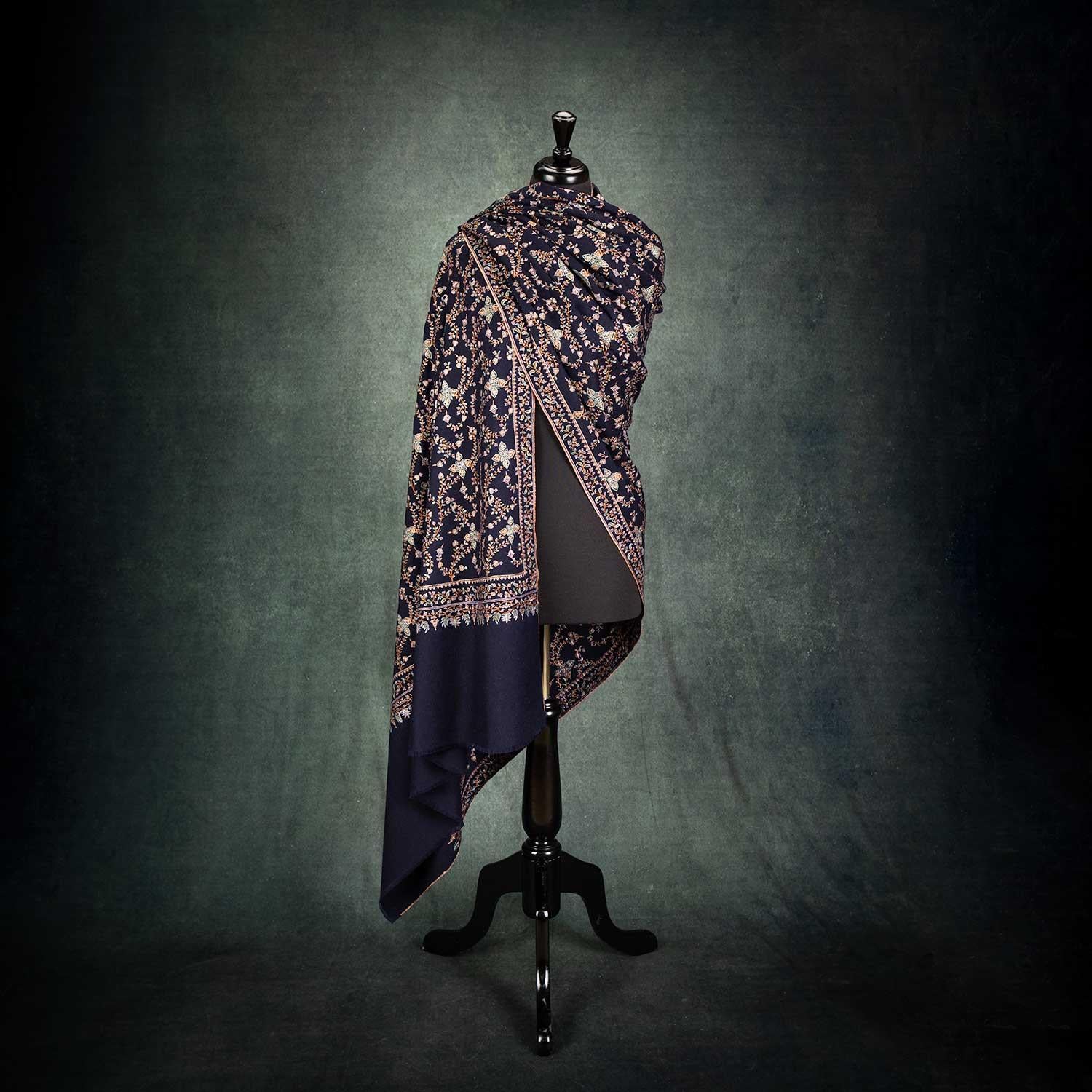
Silk Embroidered Jamawar Shawl Raat
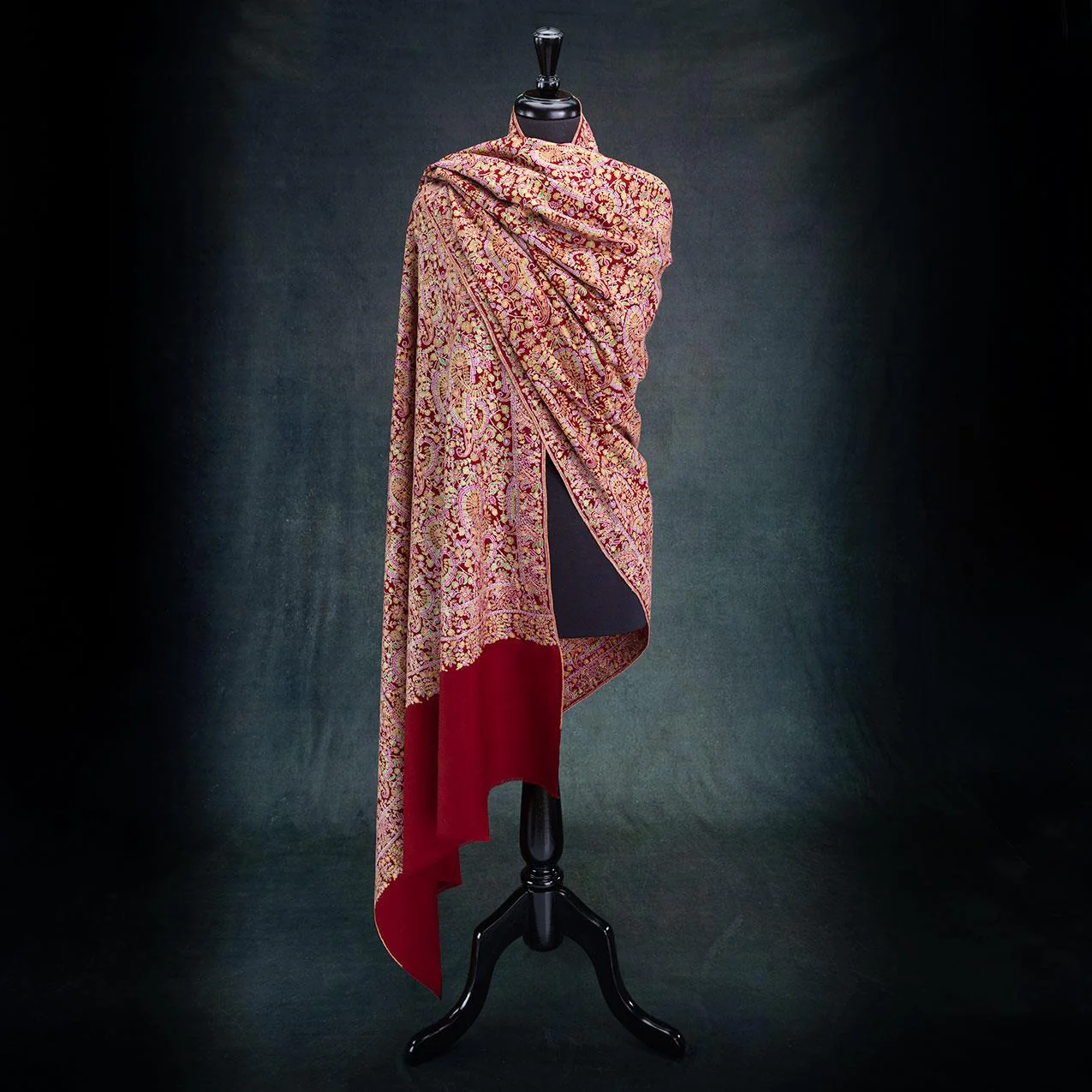
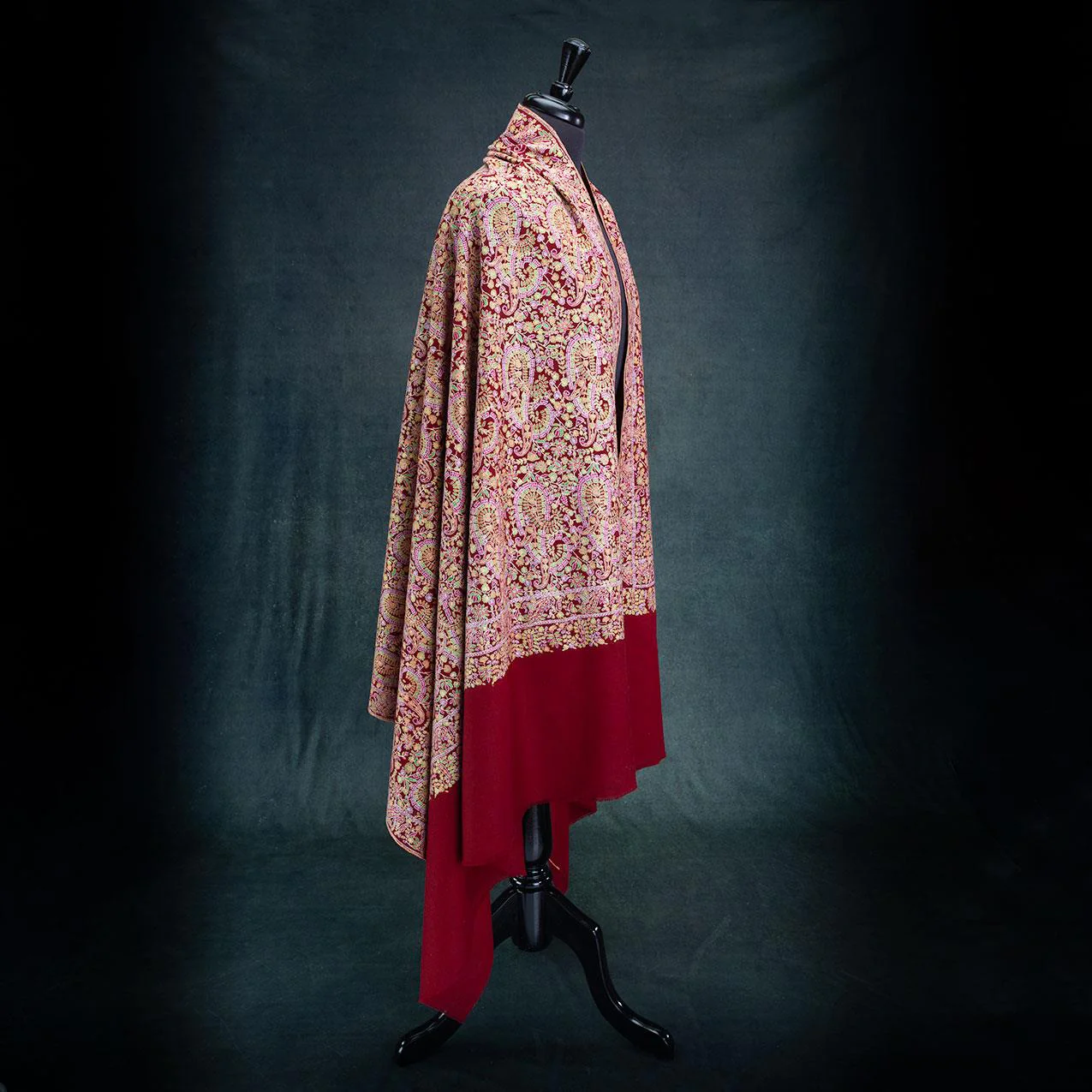
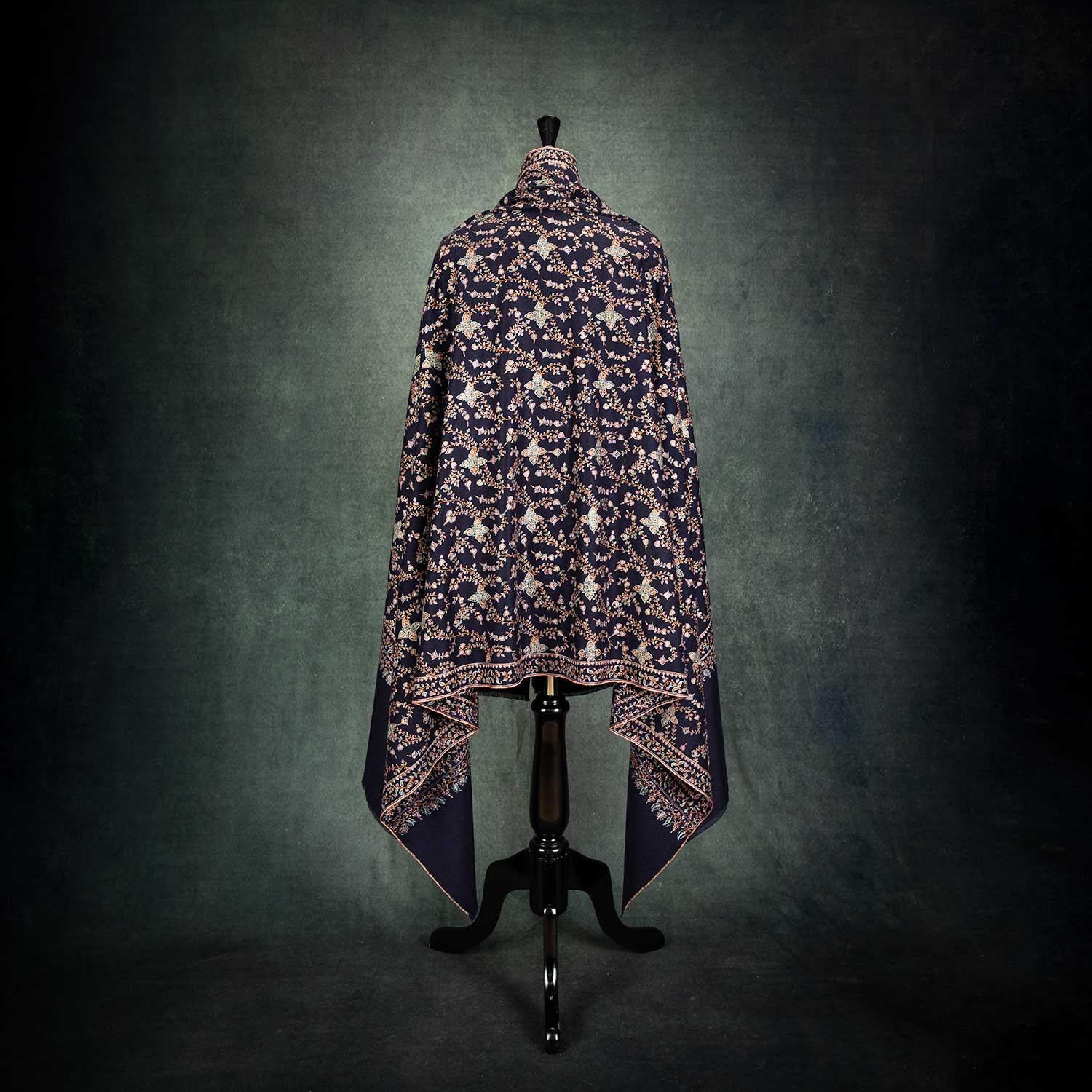
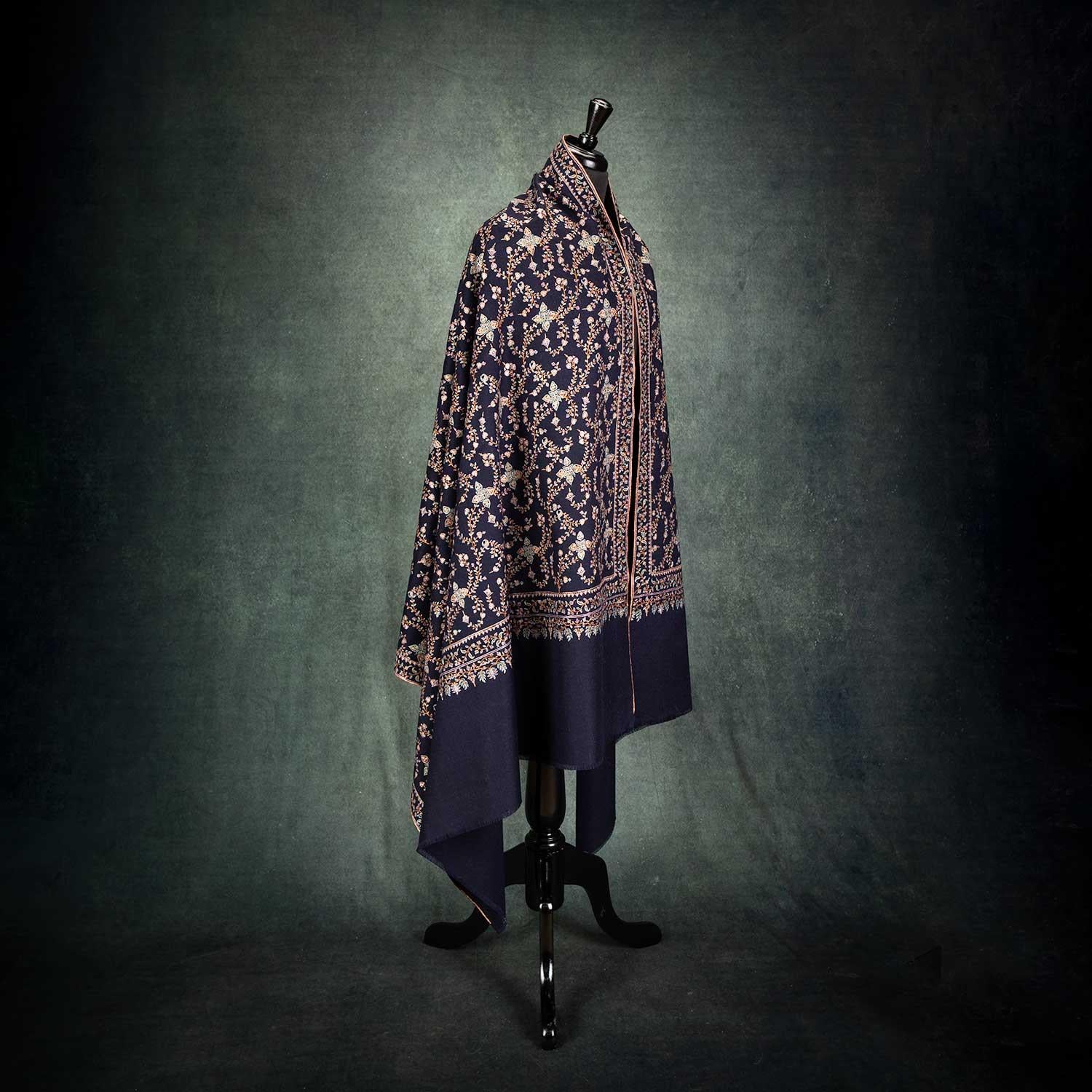
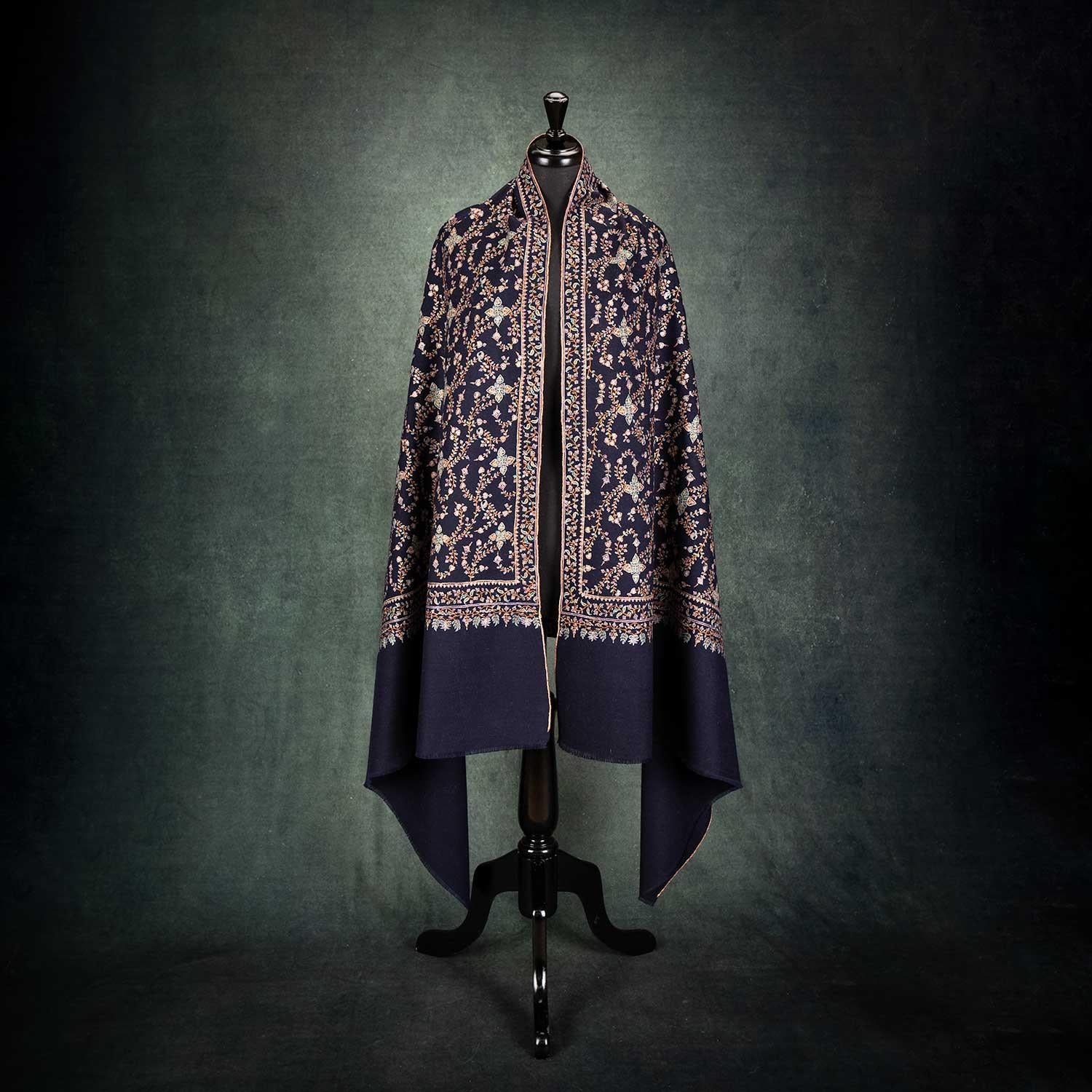
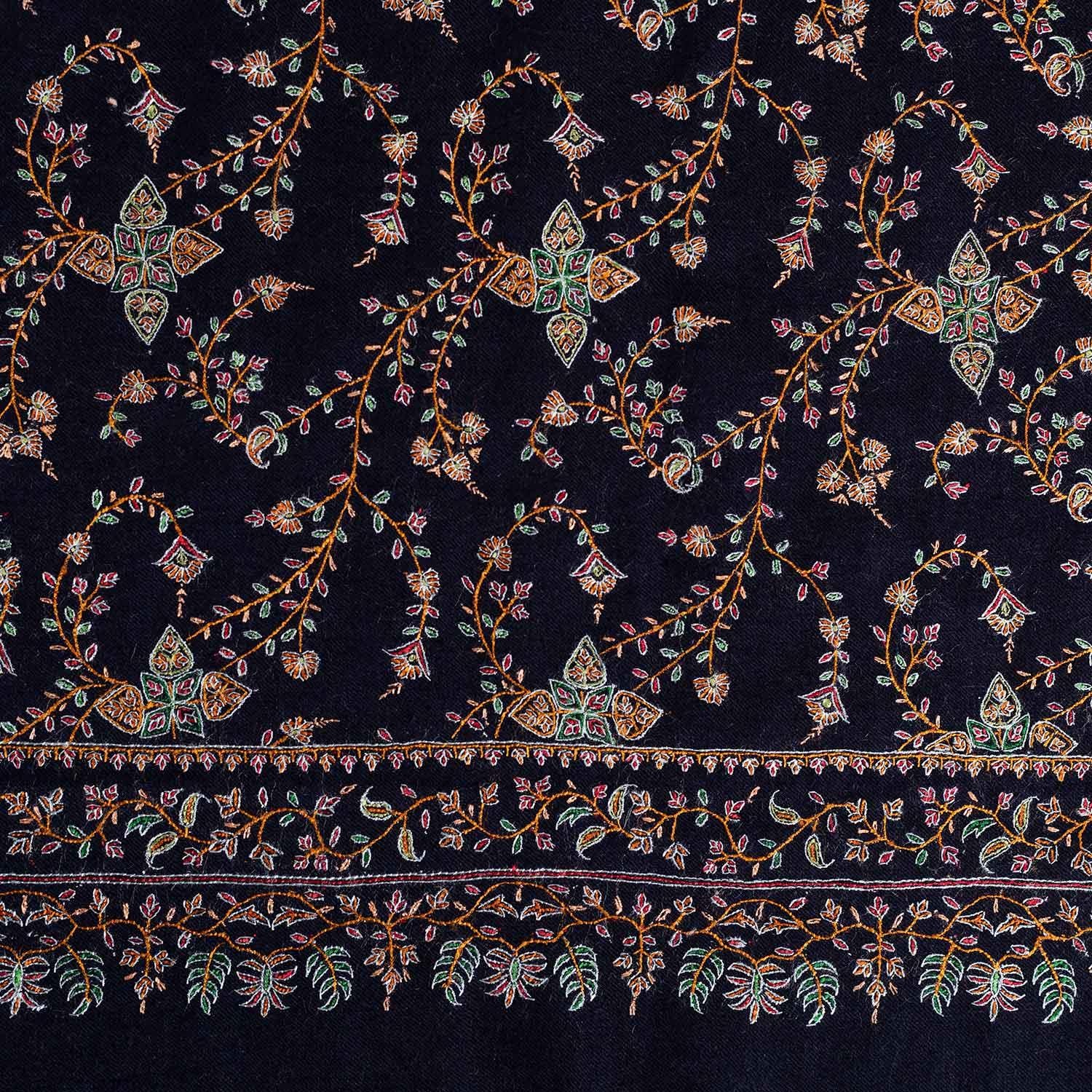
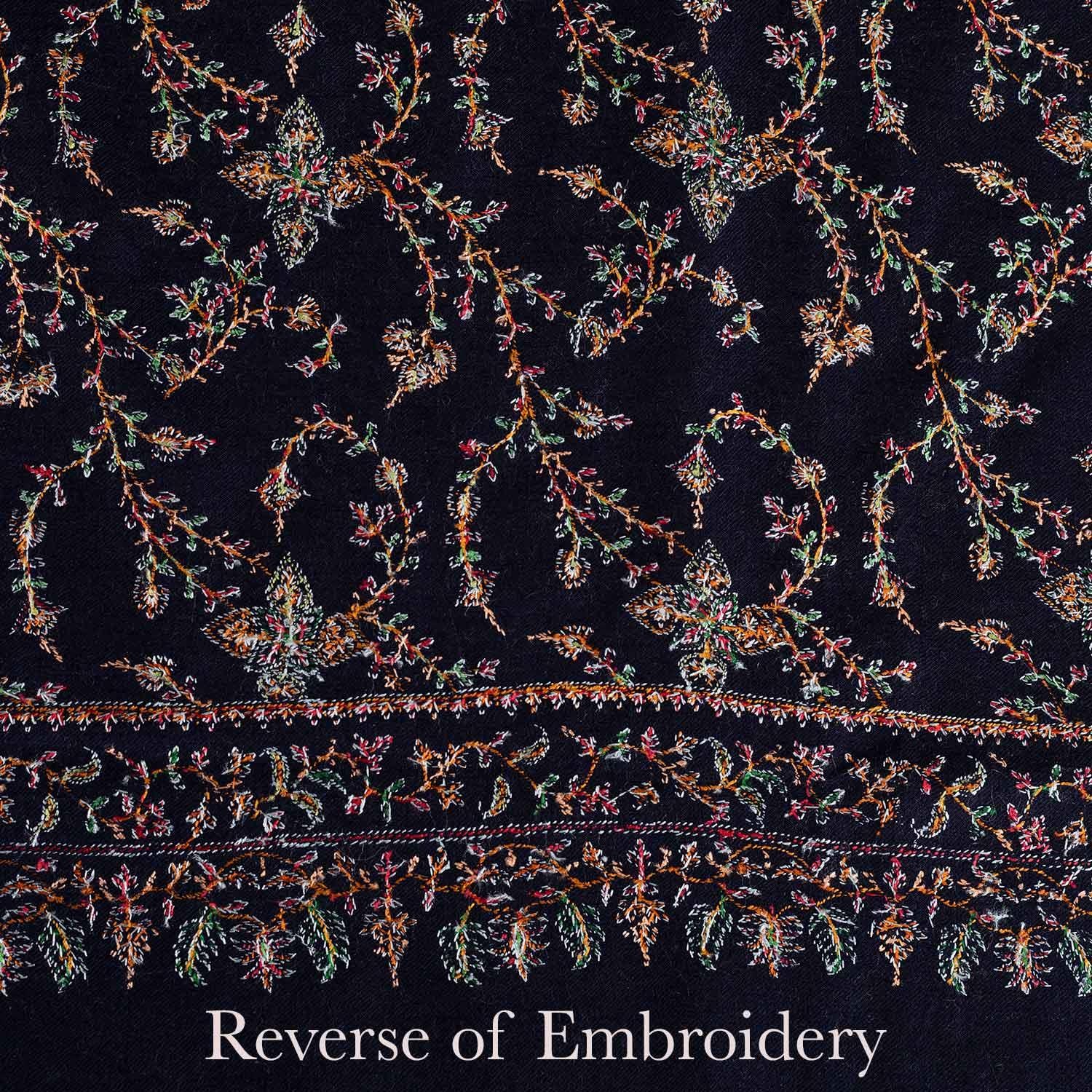
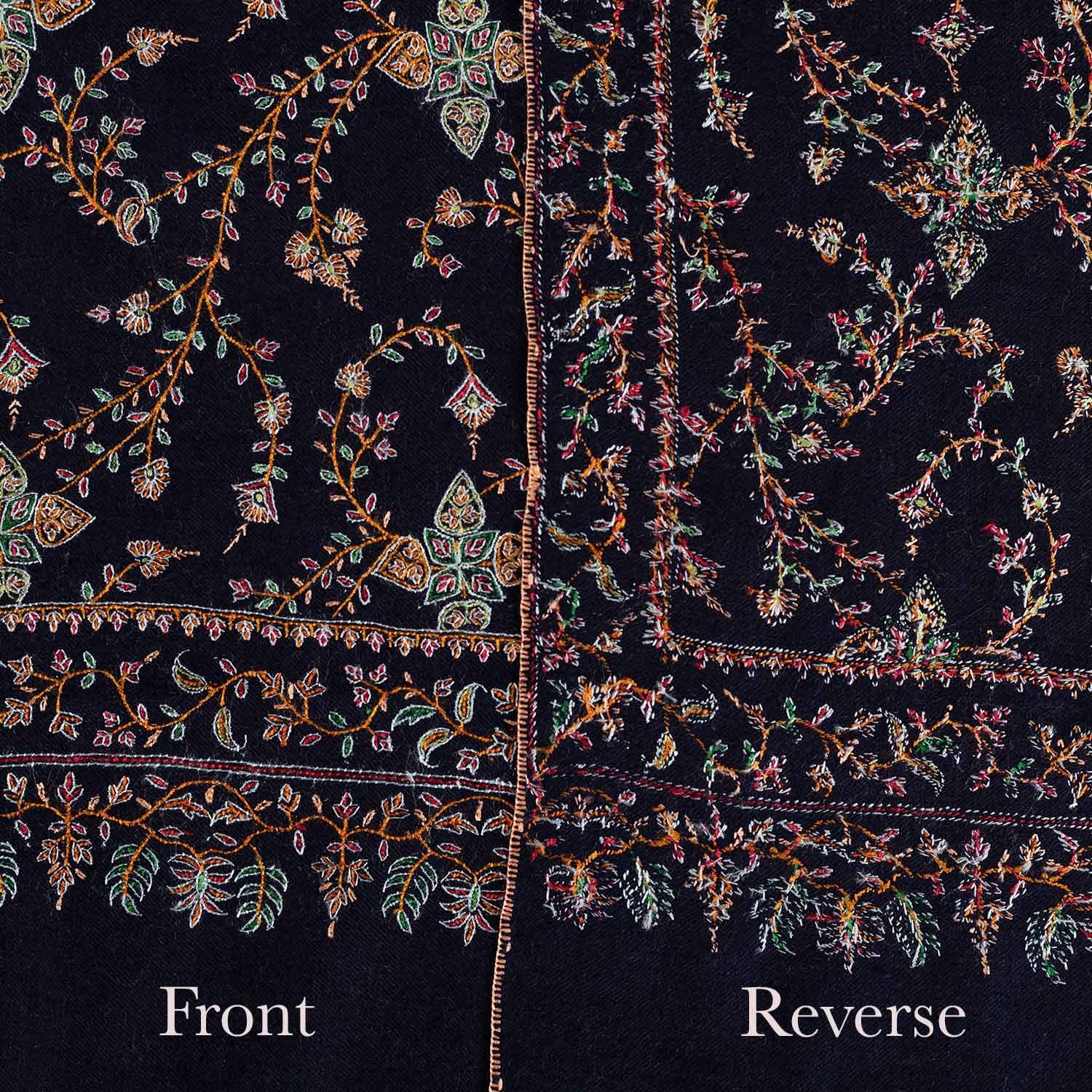
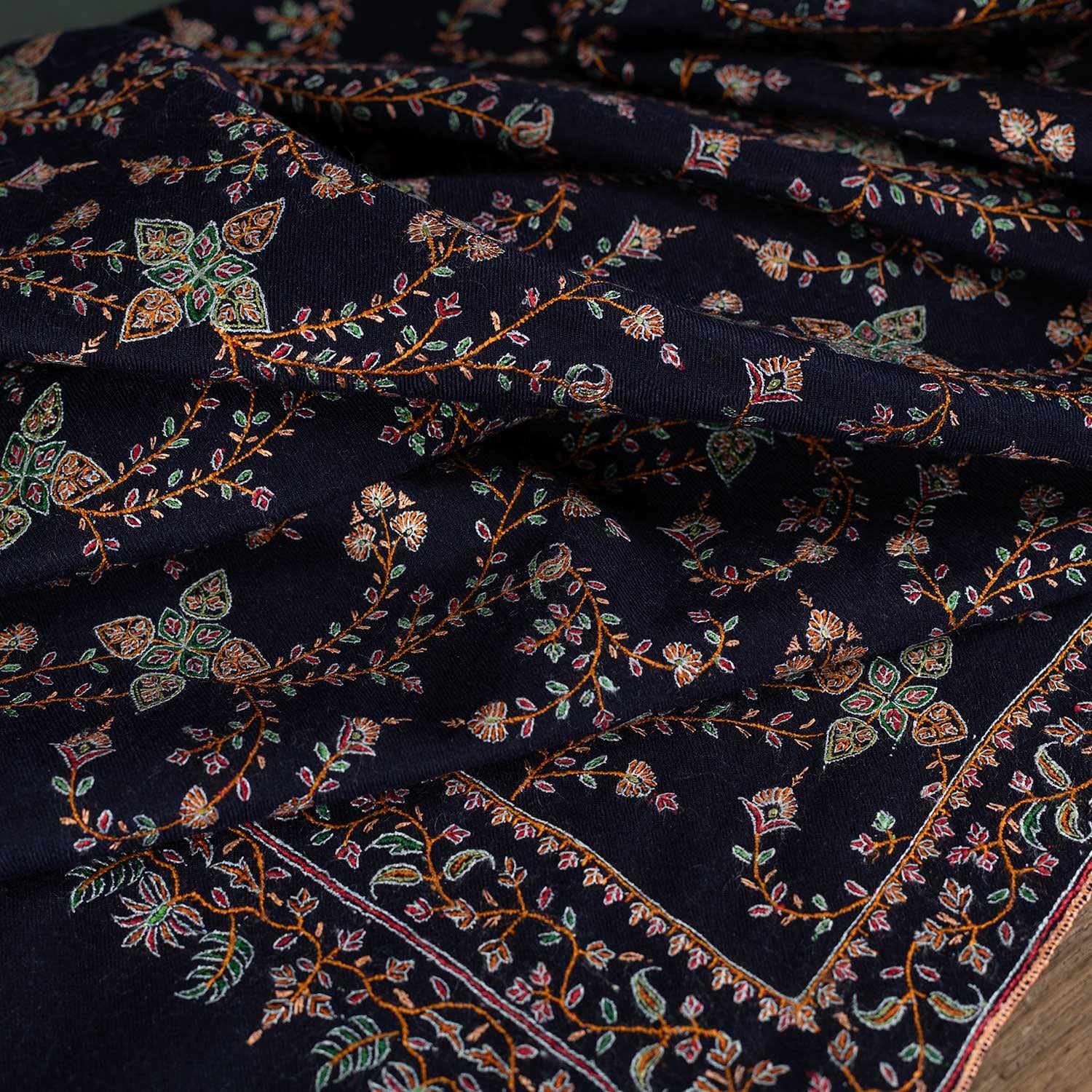
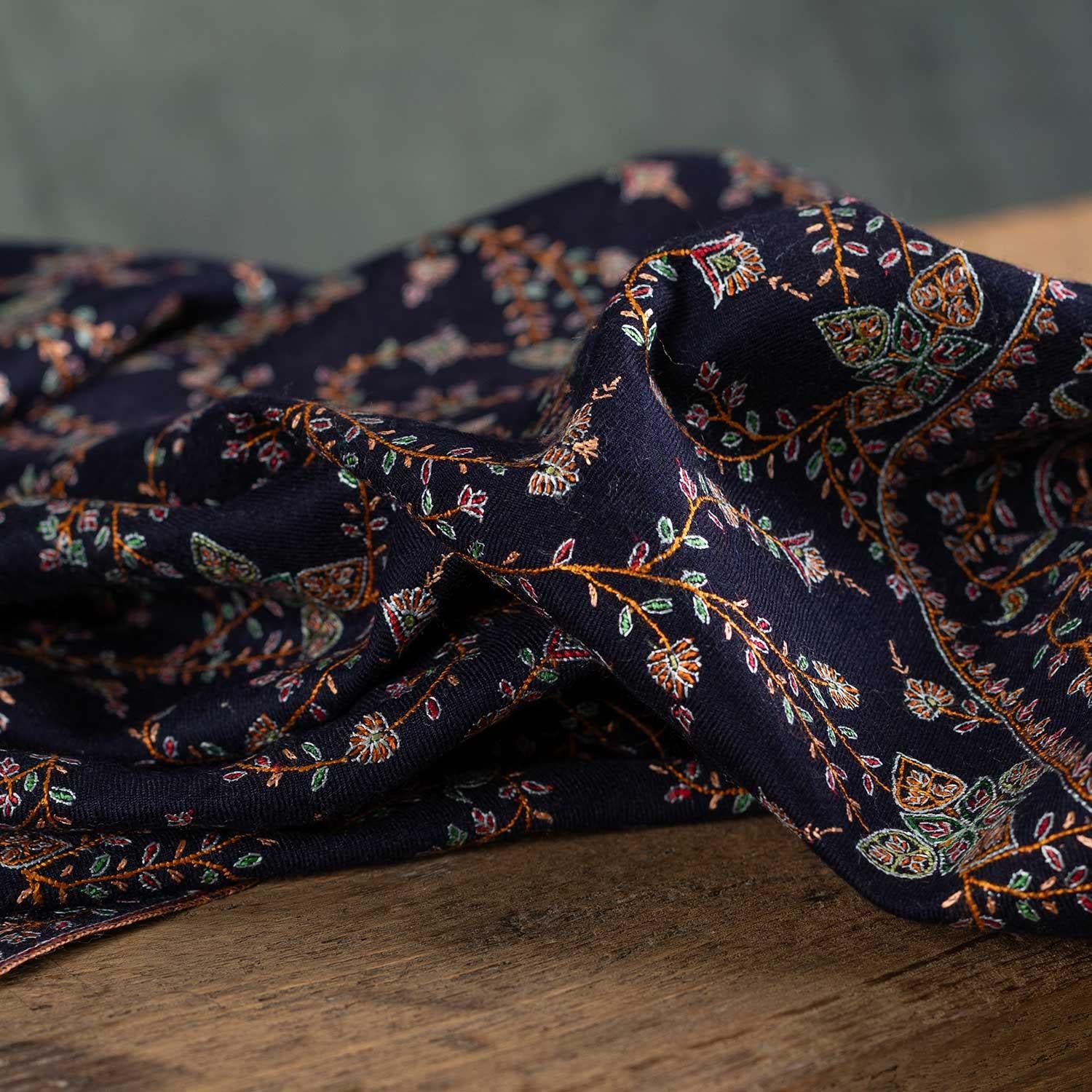
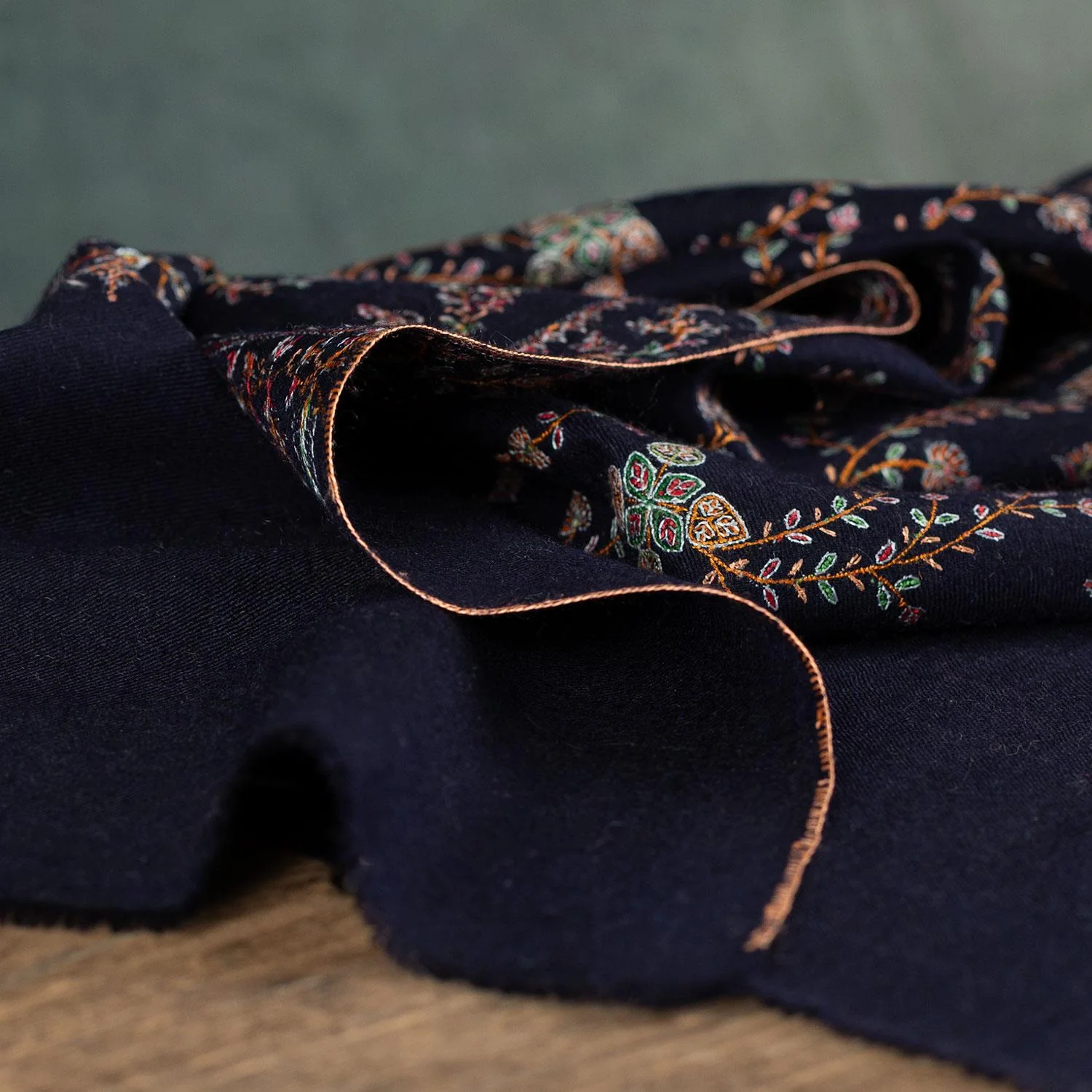
Exclusive Master Work, hand-embroidered with 100% pure silk and hand-loomed finest cashmere pashmina. A beautiful example of intricate silk embroidery which delicately covers the rich navy cashmere fabric.
The cashmere for this piece was sourced in May 2021 from a private herd of Changthani goats owned by Mr Tsering Angchuk in Datt Village, Ladakh. Described as the “Kohinoor” of cashmere, the fibre is prized for its exceptional rarity and fineness. Mr Angchuk tends a herd of approximately 800 goats, continuing a way of life held within his family for generations.
Winter in this Himalayan cold desert can plunge to –35°C. The Changthani goats that graze here are protected by a remarkable double coat: a hardy outer layer to withstand the elements, and a downy undercoat that provides warmth in the mountain air. Each spring, shepherds carefully comb out these soft fibres by hand; the precious underlayer used to make pashminas.
After harvesting, the raw cashmere is washed, carded, and carefully de-haired — a meticulous process that removes the thicker guard hairs so only the finest pashmina remains. Widely regarded as among the world’s best, this cashmere is combed from the chest and underbelly of the goats, where the fibre is at its most delicate. The result is a material that feels weightless yet insulates beautifully, with ultra-fine fibres measuring approximately 9 to 16 microns.
Hand-spun by Hamida, a student at Kashmir University, the yarn supports a wider network of women in local self-help groups involved in pashmina spinning. The fabric was woven in Srinagar by Mr Abid Khan on a traditional pit loom (one of two he owns), taking approximately three to four days to complete.
A beautiful example of traditional hand needlework worked on handwoven cashmere. The embroidery is an age-old craft from Kashmir’s Ganderbal district, executed here in the Gulabdar Phooldar style — gulab meaning “rose” and phool meaning “flower”. In this technique, the stitch length is longer than in Sozni and the densely worked floral motifs of fully embroidered Jamawar.
This shawl is embroidered as Mem Jamawar, a refined style with lighter ornamentation than full Jamawar. Popular in the early 1900s, it was traditionally prized as an ornamental gift, particularly for Kashmiri wedding ceremonies.
The finishing and quality check is done by Mr Zakir Wani at the antique finishing plant in Hawal, Srinagar.
Accompanying your shawl is 'The Kashmir Shawl', a book that beautifully illustrates the 'landscape and lives' that contribute to the creation of these magnificent shawls, enriching your appreciation for this artisanal work.
- Size: 100 x 202 CM, (39.5 x 79.5 inches). Weight: 285 gms
- Composition: Grade 'Ultra-Luxury' 100% Cashmere, originates from Kharnak, Ladakh, (with silk embroidery).
- Origin: Made in India
Product Care
Professional clean only.
Origin & Sustainability
This shawl embodies the principles of slow fashion — each stage, from sourcing to spinning, weaving and embroidery, is done by hand and can take months to complete. Every artisan involved brings years of skill, care and cultural heritage to the process.
Made from Grade A Ladakhi pashmina, this shawl uses one of the world’s finest natural fibres. Cashmere is not only supremely soft and warm, it is also renewable, biodegradable, and long-lasting — a conscious choice for those who value quality over quantity.
By supporting this craft, you help sustain traditional livelihoods and protect centuries-old skills and traditions. Read more on our Himalaya-based suppliers here.
Original: $3,619.42
-65%$3,619.42
$1,266.80More Images
Silk Embroidered Jamawar Shawl Raat
Exclusive Master Work, hand-embroidered with 100% pure silk and hand-loomed finest cashmere pashmina. A beautiful example of intricate silk embroidery which delicately covers the rich navy cashmere fabric.
The cashmere for this piece was sourced in May 2021 from a private herd of Changthani goats owned by Mr Tsering Angchuk in Datt Village, Ladakh. Described as the “Kohinoor” of cashmere, the fibre is prized for its exceptional rarity and fineness. Mr Angchuk tends a herd of approximately 800 goats, continuing a way of life held within his family for generations.
Winter in this Himalayan cold desert can plunge to –35°C. The Changthani goats that graze here are protected by a remarkable double coat: a hardy outer layer to withstand the elements, and a downy undercoat that provides warmth in the mountain air. Each spring, shepherds carefully comb out these soft fibres by hand; the precious underlayer used to make pashminas.
After harvesting, the raw cashmere is washed, carded, and carefully de-haired — a meticulous process that removes the thicker guard hairs so only the finest pashmina remains. Widely regarded as among the world’s best, this cashmere is combed from the chest and underbelly of the goats, where the fibre is at its most delicate. The result is a material that feels weightless yet insulates beautifully, with ultra-fine fibres measuring approximately 9 to 16 microns.
Hand-spun by Hamida, a student at Kashmir University, the yarn supports a wider network of women in local self-help groups involved in pashmina spinning. The fabric was woven in Srinagar by Mr Abid Khan on a traditional pit loom (one of two he owns), taking approximately three to four days to complete.
A beautiful example of traditional hand needlework worked on handwoven cashmere. The embroidery is an age-old craft from Kashmir’s Ganderbal district, executed here in the Gulabdar Phooldar style — gulab meaning “rose” and phool meaning “flower”. In this technique, the stitch length is longer than in Sozni and the densely worked floral motifs of fully embroidered Jamawar.
This shawl is embroidered as Mem Jamawar, a refined style with lighter ornamentation than full Jamawar. Popular in the early 1900s, it was traditionally prized as an ornamental gift, particularly for Kashmiri wedding ceremonies.
The finishing and quality check is done by Mr Zakir Wani at the antique finishing plant in Hawal, Srinagar.
Accompanying your shawl is 'The Kashmir Shawl', a book that beautifully illustrates the 'landscape and lives' that contribute to the creation of these magnificent shawls, enriching your appreciation for this artisanal work.
- Size: 100 x 202 CM, (39.5 x 79.5 inches). Weight: 285 gms
- Composition: Grade 'Ultra-Luxury' 100% Cashmere, originates from Kharnak, Ladakh, (with silk embroidery).
- Origin: Made in India
Product Care
Professional clean only.
Origin & Sustainability
This shawl embodies the principles of slow fashion — each stage, from sourcing to spinning, weaving and embroidery, is done by hand and can take months to complete. Every artisan involved brings years of skill, care and cultural heritage to the process.
Made from Grade A Ladakhi pashmina, this shawl uses one of the world’s finest natural fibres. Cashmere is not only supremely soft and warm, it is also renewable, biodegradable, and long-lasting — a conscious choice for those who value quality over quantity.
By supporting this craft, you help sustain traditional livelihoods and protect centuries-old skills and traditions. Read more on our Himalaya-based suppliers here.
Product Information
Product Information
Shipping & Returns
Shipping & Returns
Description
Exclusive Master Work, hand-embroidered with 100% pure silk and hand-loomed finest cashmere pashmina. A beautiful example of intricate silk embroidery which delicately covers the rich navy cashmere fabric.
The cashmere for this piece was sourced in May 2021 from a private herd of Changthani goats owned by Mr Tsering Angchuk in Datt Village, Ladakh. Described as the “Kohinoor” of cashmere, the fibre is prized for its exceptional rarity and fineness. Mr Angchuk tends a herd of approximately 800 goats, continuing a way of life held within his family for generations.
Winter in this Himalayan cold desert can plunge to –35°C. The Changthani goats that graze here are protected by a remarkable double coat: a hardy outer layer to withstand the elements, and a downy undercoat that provides warmth in the mountain air. Each spring, shepherds carefully comb out these soft fibres by hand; the precious underlayer used to make pashminas.
After harvesting, the raw cashmere is washed, carded, and carefully de-haired — a meticulous process that removes the thicker guard hairs so only the finest pashmina remains. Widely regarded as among the world’s best, this cashmere is combed from the chest and underbelly of the goats, where the fibre is at its most delicate. The result is a material that feels weightless yet insulates beautifully, with ultra-fine fibres measuring approximately 9 to 16 microns.
Hand-spun by Hamida, a student at Kashmir University, the yarn supports a wider network of women in local self-help groups involved in pashmina spinning. The fabric was woven in Srinagar by Mr Abid Khan on a traditional pit loom (one of two he owns), taking approximately three to four days to complete.
A beautiful example of traditional hand needlework worked on handwoven cashmere. The embroidery is an age-old craft from Kashmir’s Ganderbal district, executed here in the Gulabdar Phooldar style — gulab meaning “rose” and phool meaning “flower”. In this technique, the stitch length is longer than in Sozni and the densely worked floral motifs of fully embroidered Jamawar.
This shawl is embroidered as Mem Jamawar, a refined style with lighter ornamentation than full Jamawar. Popular in the early 1900s, it was traditionally prized as an ornamental gift, particularly for Kashmiri wedding ceremonies.
The finishing and quality check is done by Mr Zakir Wani at the antique finishing plant in Hawal, Srinagar.
Accompanying your shawl is 'The Kashmir Shawl', a book that beautifully illustrates the 'landscape and lives' that contribute to the creation of these magnificent shawls, enriching your appreciation for this artisanal work.
- Size: 100 x 202 CM, (39.5 x 79.5 inches). Weight: 285 gms
- Composition: Grade 'Ultra-Luxury' 100% Cashmere, originates from Kharnak, Ladakh, (with silk embroidery).
- Origin: Made in India
Product Care
Professional clean only.
Origin & Sustainability
This shawl embodies the principles of slow fashion — each stage, from sourcing to spinning, weaving and embroidery, is done by hand and can take months to complete. Every artisan involved brings years of skill, care and cultural heritage to the process.
Made from Grade A Ladakhi pashmina, this shawl uses one of the world’s finest natural fibres. Cashmere is not only supremely soft and warm, it is also renewable, biodegradable, and long-lasting — a conscious choice for those who value quality over quantity.
By supporting this craft, you help sustain traditional livelihoods and protect centuries-old skills and traditions. Read more on our Himalaya-based suppliers here.