Ganderbal Hand Embroidered Pashmina Mandala
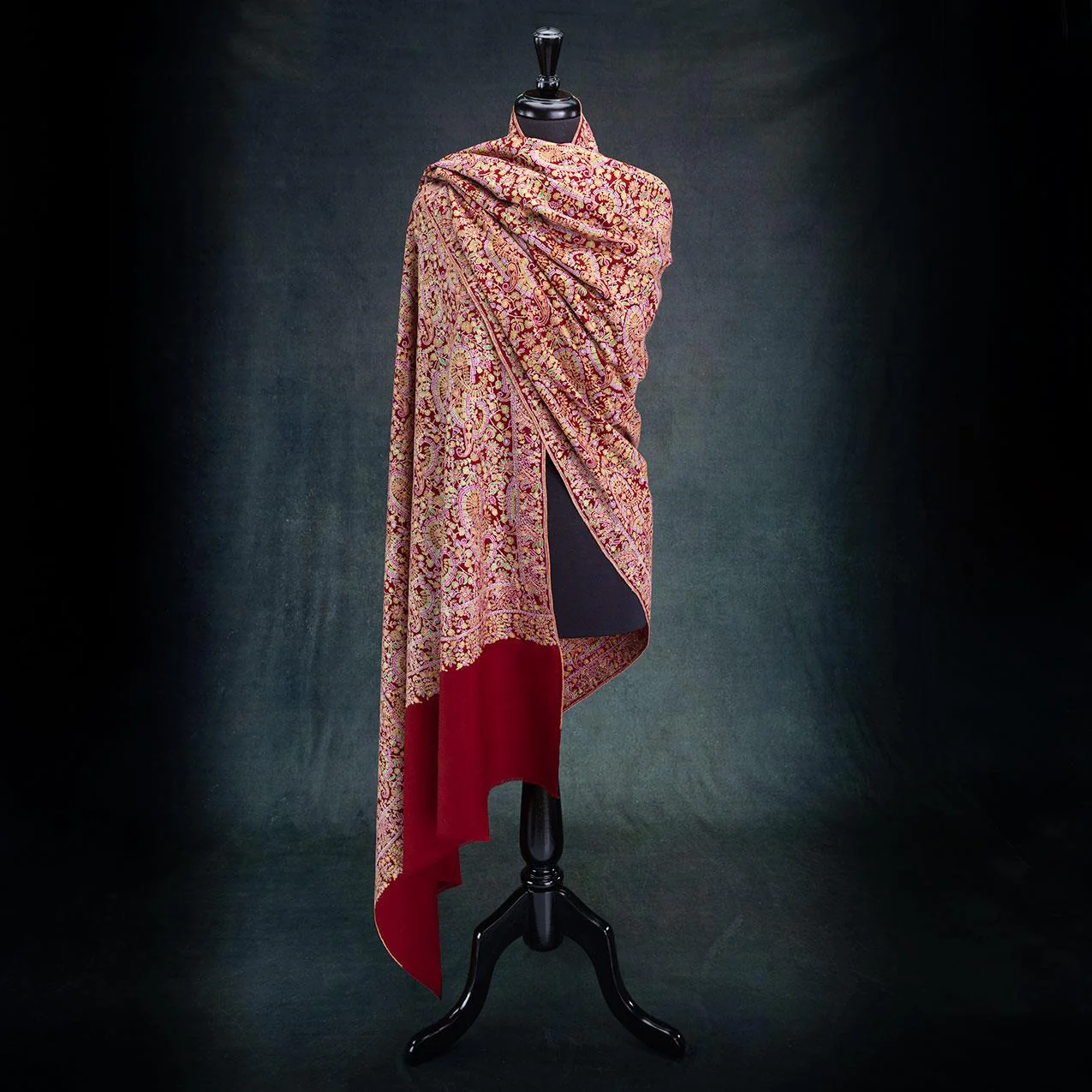
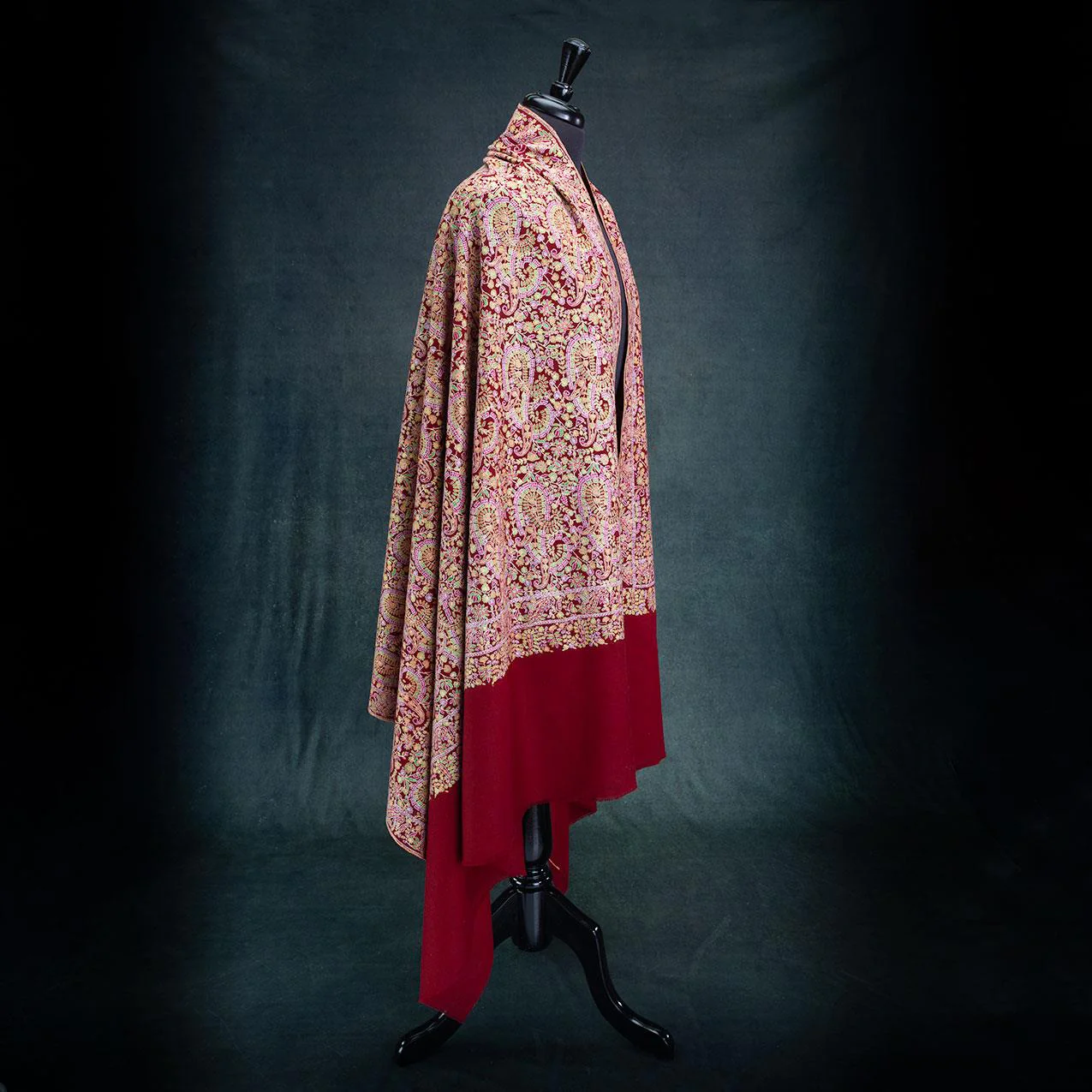
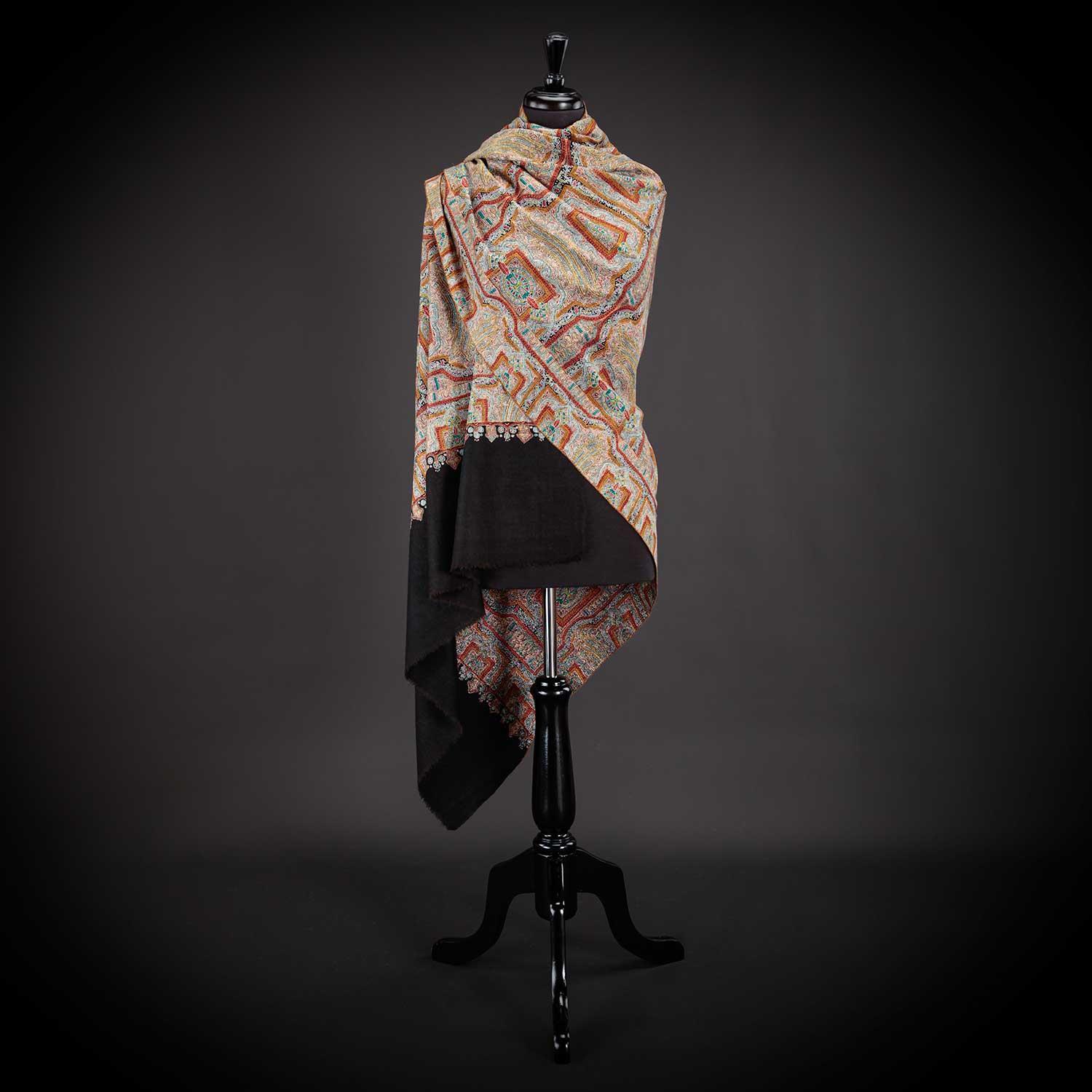
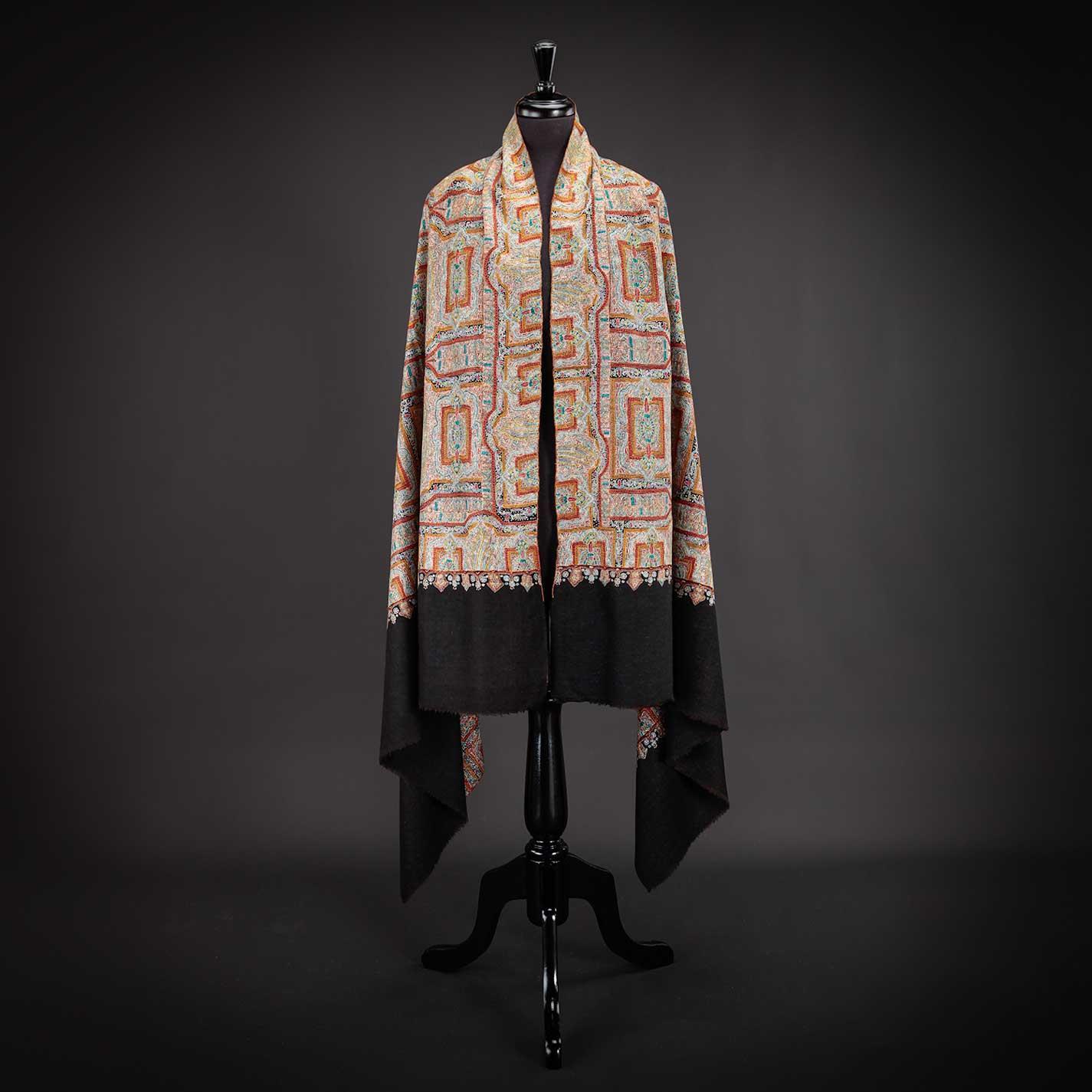
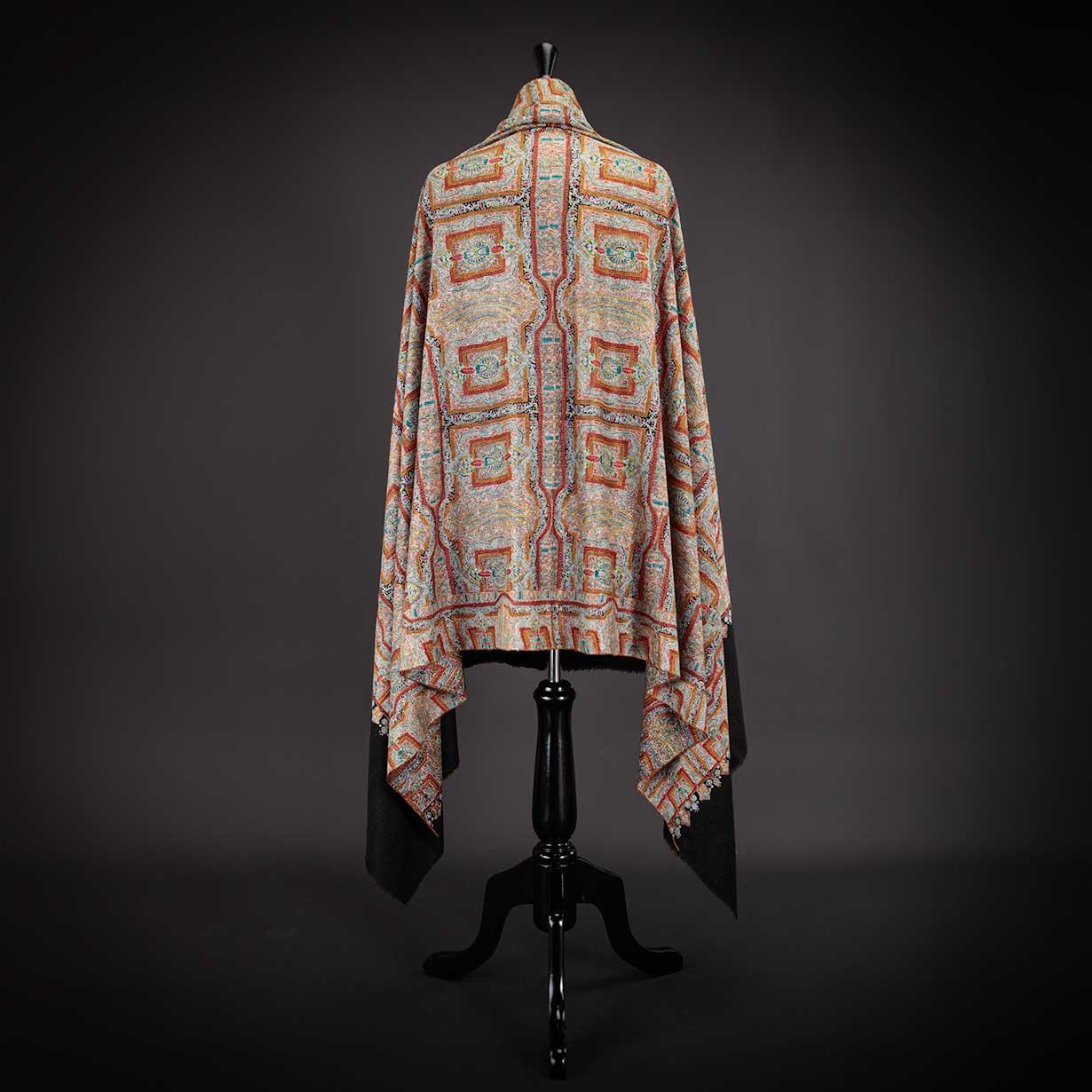
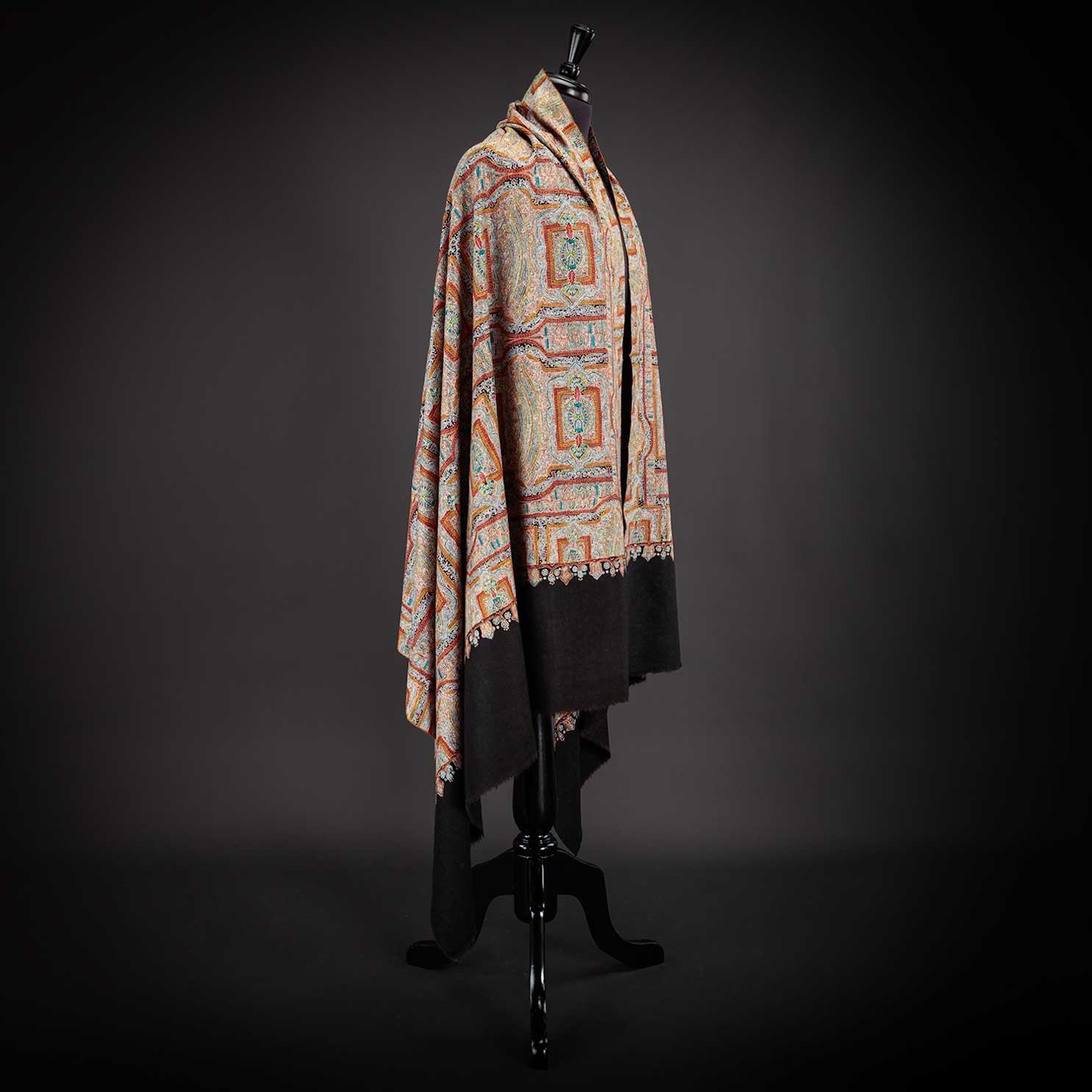
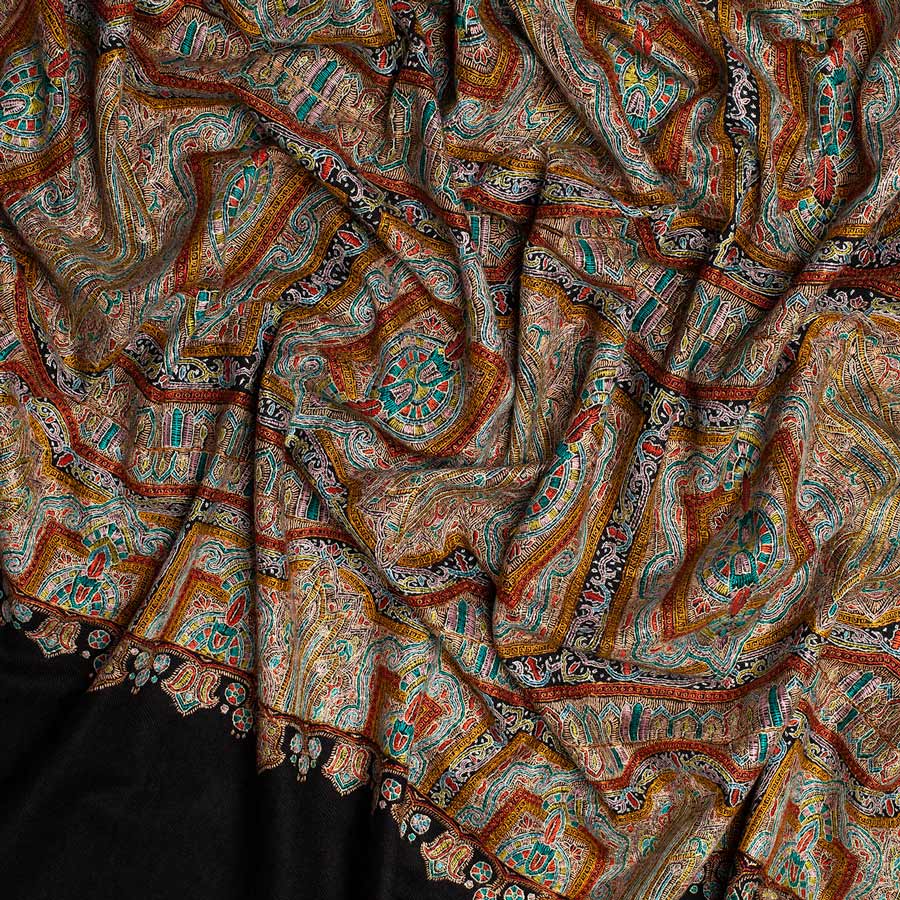
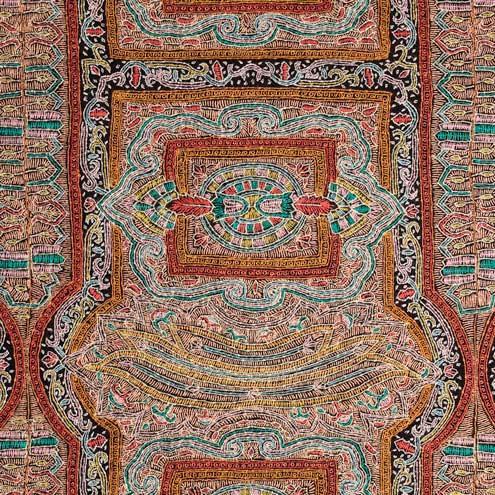
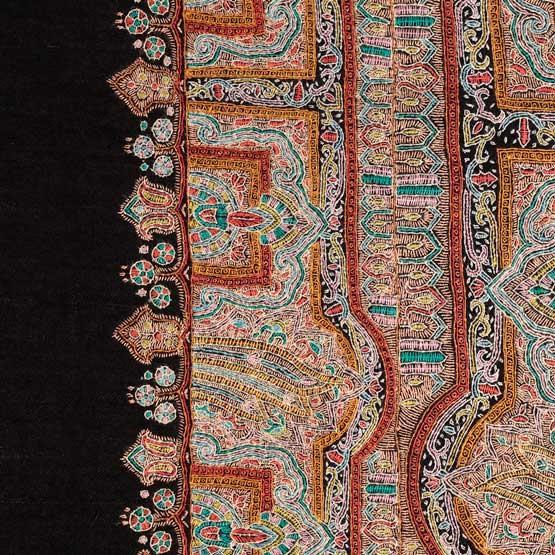
This cashmere pashmina is a perfectly beautiful example of handwoven and hand-embroidered craftsmanship from Kashmir. The design is inspired by Mandala Geometry and mandals worn by Buddhist monks.
This truly magnificent piece can be worn by anyone and will make a gift which will last more than a lifetime. If cared for properly, it will become an heirloom, cherished by future generations. It is an exquisite work of art, a sustainable garment that will never go out of fashion. A most elegant classic piece for a discerning wardrobe.
The raw pashmina wool is collected from private herds of Changthani goats before being washed, carded, and de-haired. De-hairing is the process of separating the guard hair (thick hair) from the pashmina fibres so that only the finest hairs remain. The raw pashmina for this shawl was sourced in June 2014, and the shawl was finally finished in September 2019.
The baby soft pashmina is spun by hand, converting the soft fibre into an ultrafine yarn that even modern technology would struggle to achieve. Hand spinning is a traditional craft in Kashmir, taking a skilled and experienced craftsperson one month to spin 100 gms of pashmina yarn.
The average time it takes to weave the fabric for a shawl by hand is normally 34 days. This Mandala shawl took over a month to weave to achieve the beautifully fine finish. The fabric was dyed by one of the oldest and traditional dyeing companies in Srinagar.
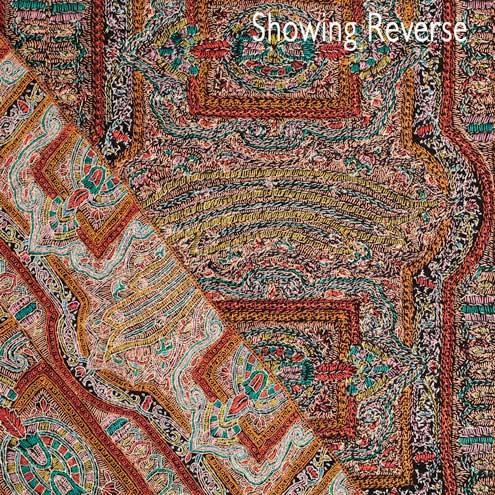
The embroidery for this stunning shawl took almost a year for an accomplished 'golden hands' craftsman to complete in the Ganderbal district of Kashmir, where hand embroidery is an age-old tradition. Once the embroidery is finished, the shawl is carefully checked and washed in crisp Himalayan water.
The pashmina used in this shawl comes from Changthangi goats in Leh, Ladakh, where temperatures can reach minus 35 degrees during winter in this cold desert region of the Himalayas. The pashmina from this region is considered amongst the best in the world. For warmth and protection, the goat grows a fine, long-haired undercoat which forms a natural heat-insulating shield against the cold. This fibre is light and warm with amazing insulating properties, and the fibres are extremely fine, varying between 9 - 16 microns.
The whole process to make this pashmina from fibre to fabric is involved and time-consuming, and depends wholly on the skill and expertise of craftsmen from Kashmir using traditions handed down over generations.
100% Cashmere - originates from Leh, Ladakh.
Size: 199 x 103 cm, 351 grams
The spinning, weaving, dyeing, and embroidery were all carried out by hand by accomplished and skilled craftsmen in Srinagar.
Care: Needs to be professionally cleaned and stored carefully.
Original: $4,405.66
-65%$4,405.66
$1,541.98More Images
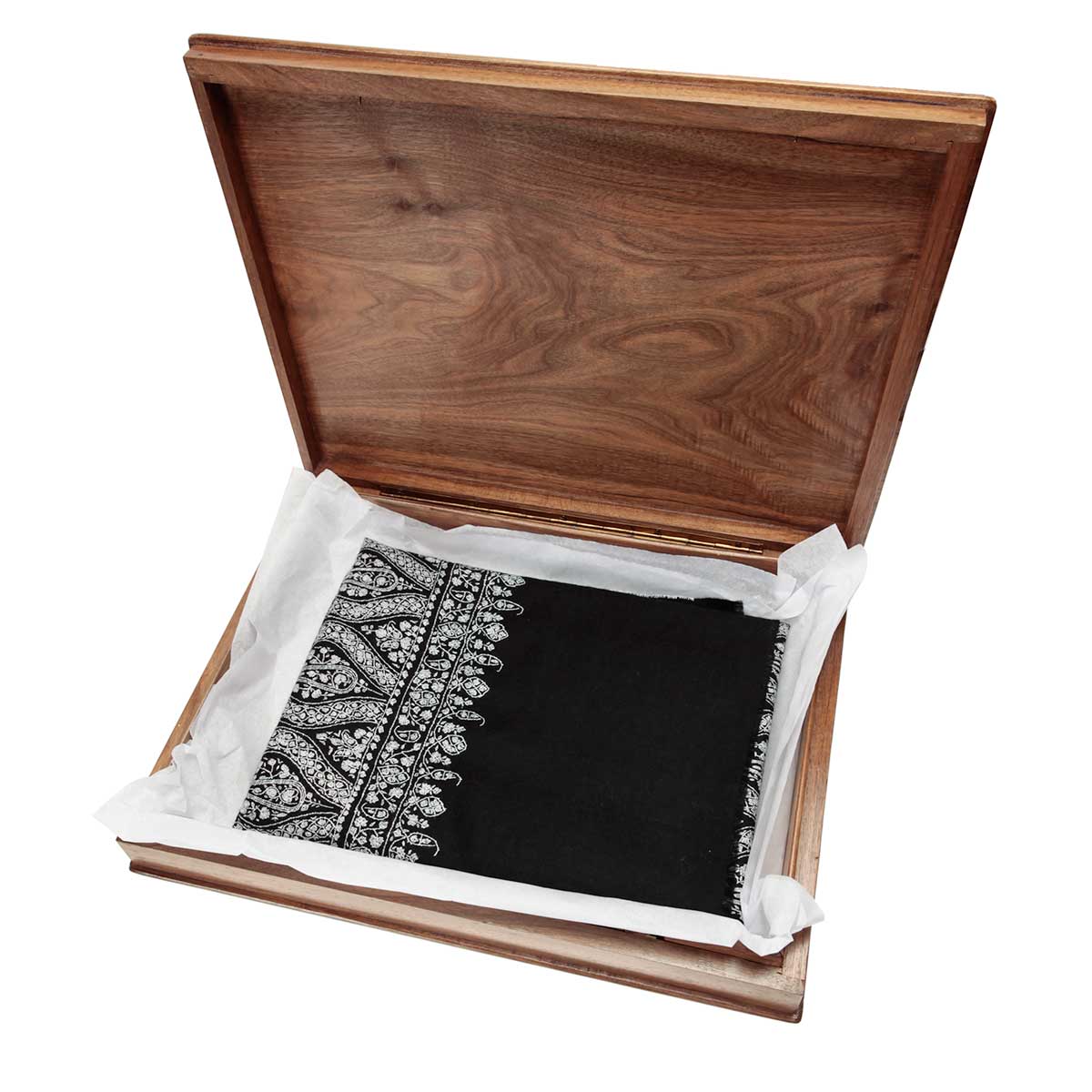
Ganderbal Hand Embroidered Pashmina Mandala
This cashmere pashmina is a perfectly beautiful example of handwoven and hand-embroidered craftsmanship from Kashmir. The design is inspired by Mandala Geometry and mandals worn by Buddhist monks.
This truly magnificent piece can be worn by anyone and will make a gift which will last more than a lifetime. If cared for properly, it will become an heirloom, cherished by future generations. It is an exquisite work of art, a sustainable garment that will never go out of fashion. A most elegant classic piece for a discerning wardrobe.
The raw pashmina wool is collected from private herds of Changthani goats before being washed, carded, and de-haired. De-hairing is the process of separating the guard hair (thick hair) from the pashmina fibres so that only the finest hairs remain. The raw pashmina for this shawl was sourced in June 2014, and the shawl was finally finished in September 2019.
The baby soft pashmina is spun by hand, converting the soft fibre into an ultrafine yarn that even modern technology would struggle to achieve. Hand spinning is a traditional craft in Kashmir, taking a skilled and experienced craftsperson one month to spin 100 gms of pashmina yarn.
The average time it takes to weave the fabric for a shawl by hand is normally 34 days. This Mandala shawl took over a month to weave to achieve the beautifully fine finish. The fabric was dyed by one of the oldest and traditional dyeing companies in Srinagar.
The embroidery for this stunning shawl took almost a year for an accomplished 'golden hands' craftsman to complete in the Ganderbal district of Kashmir, where hand embroidery is an age-old tradition. Once the embroidery is finished, the shawl is carefully checked and washed in crisp Himalayan water.
The pashmina used in this shawl comes from Changthangi goats in Leh, Ladakh, where temperatures can reach minus 35 degrees during winter in this cold desert region of the Himalayas. The pashmina from this region is considered amongst the best in the world. For warmth and protection, the goat grows a fine, long-haired undercoat which forms a natural heat-insulating shield against the cold. This fibre is light and warm with amazing insulating properties, and the fibres are extremely fine, varying between 9 - 16 microns.
The whole process to make this pashmina from fibre to fabric is involved and time-consuming, and depends wholly on the skill and expertise of craftsmen from Kashmir using traditions handed down over generations.
100% Cashmere - originates from Leh, Ladakh.
Size: 199 x 103 cm, 351 grams
The spinning, weaving, dyeing, and embroidery were all carried out by hand by accomplished and skilled craftsmen in Srinagar.
Care: Needs to be professionally cleaned and stored carefully.
Product Information
Product Information
Shipping & Returns
Shipping & Returns
Description
This cashmere pashmina is a perfectly beautiful example of handwoven and hand-embroidered craftsmanship from Kashmir. The design is inspired by Mandala Geometry and mandals worn by Buddhist monks.
This truly magnificent piece can be worn by anyone and will make a gift which will last more than a lifetime. If cared for properly, it will become an heirloom, cherished by future generations. It is an exquisite work of art, a sustainable garment that will never go out of fashion. A most elegant classic piece for a discerning wardrobe.
The raw pashmina wool is collected from private herds of Changthani goats before being washed, carded, and de-haired. De-hairing is the process of separating the guard hair (thick hair) from the pashmina fibres so that only the finest hairs remain. The raw pashmina for this shawl was sourced in June 2014, and the shawl was finally finished in September 2019.
The baby soft pashmina is spun by hand, converting the soft fibre into an ultrafine yarn that even modern technology would struggle to achieve. Hand spinning is a traditional craft in Kashmir, taking a skilled and experienced craftsperson one month to spin 100 gms of pashmina yarn.
The average time it takes to weave the fabric for a shawl by hand is normally 34 days. This Mandala shawl took over a month to weave to achieve the beautifully fine finish. The fabric was dyed by one of the oldest and traditional dyeing companies in Srinagar.
The embroidery for this stunning shawl took almost a year for an accomplished 'golden hands' craftsman to complete in the Ganderbal district of Kashmir, where hand embroidery is an age-old tradition. Once the embroidery is finished, the shawl is carefully checked and washed in crisp Himalayan water.
The pashmina used in this shawl comes from Changthangi goats in Leh, Ladakh, where temperatures can reach minus 35 degrees during winter in this cold desert region of the Himalayas. The pashmina from this region is considered amongst the best in the world. For warmth and protection, the goat grows a fine, long-haired undercoat which forms a natural heat-insulating shield against the cold. This fibre is light and warm with amazing insulating properties, and the fibres are extremely fine, varying between 9 - 16 microns.
The whole process to make this pashmina from fibre to fabric is involved and time-consuming, and depends wholly on the skill and expertise of craftsmen from Kashmir using traditions handed down over generations.
100% Cashmere - originates from Leh, Ladakh.
Size: 199 x 103 cm, 351 grams
The spinning, weaving, dyeing, and embroidery were all carried out by hand by accomplished and skilled craftsmen in Srinagar.
Care: Needs to be professionally cleaned and stored carefully.